
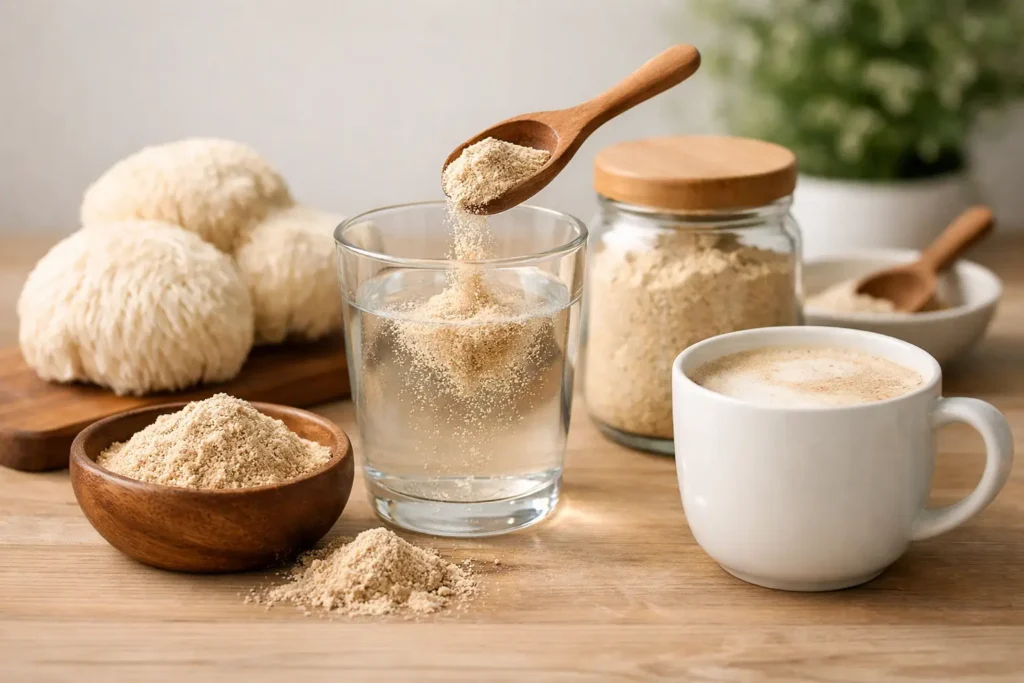
A lion’s mane powder that clumps at the bottom of a mug is not a product failure. It is usually a preparation issue. Preparing lion’s mane powder well comes down to three practical decisions: choosing the right format, using enough agitation, and fitting it into a routine you can actually maintain.
Lion’s mane is a functional mushroom commonly used by adults who want a convenient, repeatable mushroom product rather than raw dried material. Unlike whole mushroom caps, powder is designed to be measured, mixed, and used consistently. The best preparation method depends on whether you have a plain fruiting body powder, a concentrated extract, or a blend that includes other ingredients.
Start With the Product Format
Before adding powder to coffee or a smoothie, check the label. The preparation instructions, serving size, and ingredient panel matter more than a generic scoop recommendation.
A straightforward lion’s mane fruiting body powder is typically made from the visible mushroom. It may have a mild earthy flavor, a natural tan-to-brown color, and a texture that is not fully soluble. This is normal. It disperses in liquid, but it will not behave like instant coffee or a flavored drink mix.
An extract powder has been processed to concentrate selected mushroom compounds and is often designed for easier mixing and more controlled serving sizes. Some extracts are water extracted, while others may use a dual-extraction process. The label should make the format clear. Because extracts can vary significantly in concentration, do not assume that one teaspoon of an extract equals one teaspoon of whole mushroom powder.
Mycelium-based products are a separate category. Mycelium is the thread-like fungal network grown on a substrate, often grain. It is not inherently the same material as a fruiting body powder, and the ingredient statement should tell you what you are buying. Customers who value botanical specificity should look for direct, transparent language on the source material and processing method.
Preparing Lion’s Mane Powder in Hot Drinks
Coffee, tea, and cocoa are popular choices because their stronger flavors pair easily with lion’s mane’s savory, slightly woody profile. Heat is generally not a problem for typical culinary use, but boiling water alone will not prevent clumping. The key is making a smooth paste first.
Place the labeled serving of powder in an empty mug. Add one or two tablespoons of warm water, coffee, milk, or a milk alternative. Stir the mixture firmly until it becomes a slurry, then slowly add the rest of your drink while continuing to stir. A small electric frother is particularly effective for powders that tend to float or collect along the rim.
If you use a French press, add the powder after brewing rather than placing it in with the grounds. If you add it before brewing, some powder may settle into the grounds and reduce the amount that reaches your cup. For tea, blend the powder into a small amount of warm liquid first, then top it with tea.
Coffee is convenient, but it is not the only option. People sensitive to caffeine may prefer adding lion’s mane powder to herbal tea, warm oat milk, or a caffeine-free cocoa. The goal is consistency, not forcing the product into a beverage that does not work for you.
Why a Frother Makes a Difference
A spoon works for many products, but a frother creates enough movement to break apart small dry pockets quickly. This improves texture and makes the serving more uniform from the first sip to the last. A shaker bottle can work for cold drinks, although a fine powder may still stick around the lid or seal.
If you are using a sweetened or flavored product, read the ingredient list before combining it with coffee or smoothies. Added flavors, sweeteners, adaptogens, and fats can change both the taste and the way the powder mixes.
Use It in Smoothies and Food When Flavor Matters
For a lower-noticeable mushroom flavor, a smoothie is often the easiest route. Blend lion’s mane powder with ingredients that have body and flavor, such as banana, berries, yogurt, nut butter, oats, or cocoa. A high-speed blender creates a more even result than hand stirring.
The powder also works in oatmeal, overnight oats, pancake batter, soups, and sauces. Add it after cooking when possible, especially if you want the simplest preparation and better control over the final texture. In thick foods, start with the labeled serving and mix thoroughly before adding more ingredients.
There is a trade-off. Smoothies and recipes can make the powder more pleasant, but they can also make it easier to forget whether you already used it that day. If you are building a regular wellness routine, choose one reliable preparation method and use a simple habit cue, such as adding it to your first beverage or weekday breakfast.
Follow the Label Instead of Chasing a Bigger Serving
More powder is not automatically better. Functional mushroom products differ in raw material, extraction method, and concentration, so a useful serving range is product-specific. Use the manufacturer’s labeled serving as your starting point, especially with extracts and multi-mushroom formulas.
If you are new to lion’s mane, beginning with a partial serving can help you assess how it fits your routine. Some people prefer morning use because it pairs naturally with breakfast or workday beverages. Others take it later in the day without issue. There is no universal best time, and the most practical timing is the one you can repeat consistently.
Avoid treating a mushroom powder as a replacement for medical care, balanced meals, sleep, or prescribed medication. Anyone who is pregnant, nursing, managing a medical condition, taking medication, or has a known mushroom allergy should speak with a qualified healthcare professional before adding a new supplement to their routine.
Common Mixing Problems and Simple Fixes
Clumping is the most common complaint, and it usually happens when dry powder meets a full cup of liquid all at once. Use the slurry method, a frother, or a blender. If powder settles, stir again before finishing the drink. Settling does not necessarily mean the product is poor quality, particularly with less processed whole-mushroom powders.
A bitter or overly earthy taste often means the powder is being used in too little liquid or paired with a delicate drink. Try cocoa, coffee with milk, a smoothie, or a savory recipe. Do not mask an unpleasant flavor by exceeding the labeled serving or adding large amounts of sweetener. A better base is usually the cleaner solution.
If your powder has absorbed moisture or developed a stale smell, stop using it until you have checked the packaging and storage conditions. Functional mushroom powders should be kept tightly sealed in a cool, dry place, away from humidity, direct sunlight, and steam from the stove. Always use a dry scoop.
Build a Routine Around Product Quality
Preparation is only one part of a dependable experience. Look for a product with a clearly defined mushroom format, straightforward ingredients, and a stated serving size. This is especially useful when comparing fruiting body powders, extracts, capsules, and blends that may look similar at first glance but serve different preferences.
Powder offers flexibility and visibility. You can see what you are measuring, adjust the base drink or food to your taste, and make it part of a familiar routine. Capsules offer portability and a neutral experience, but they do not provide the same ability to blend the product into meals or beverages. Neither format is automatically superior. The better choice depends on whether you prioritize hands-on preparation or maximum convenience.
For customers who prefer precise category distinctions, that clarity is worth seeking from the beginning. Lion’s mane intended for regular functional use should be identified and prepared as such, not confused with wild-sourced specialty mushroom material sold for entirely different purposes.
A good cup does not need a complicated recipe. Start with a clearly labeled lion’s mane product, measure the serving carefully, mix it into a base you enjoy, and give the routine enough time to become ordinary. That is usually the preparation method that lasts.