
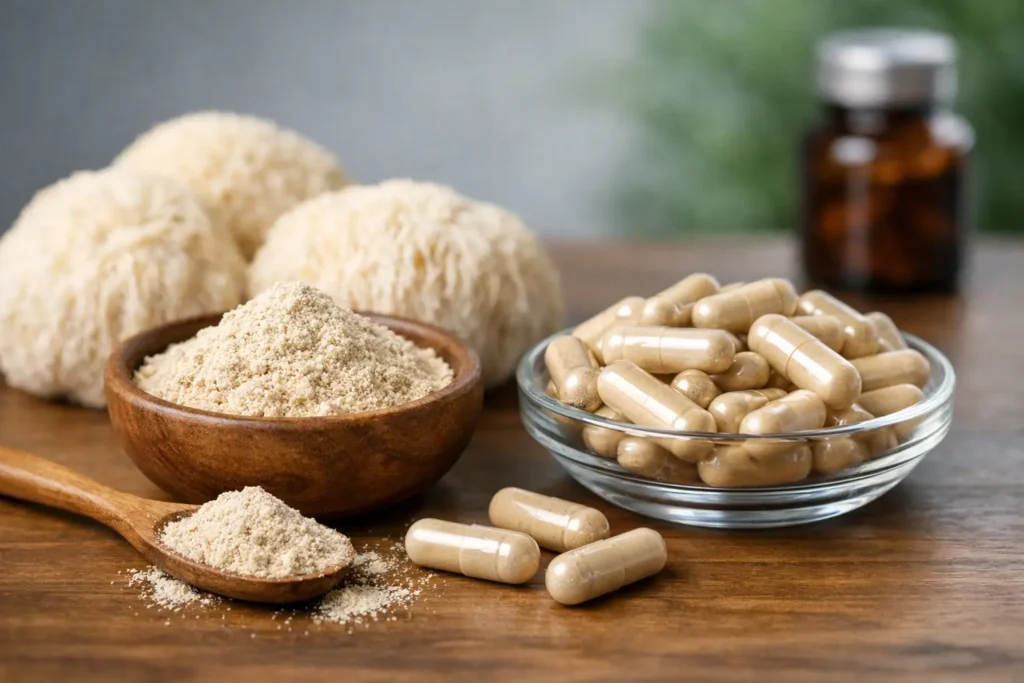
Lion’s mane is easy to recognize in the wild: a white, cascading fruiting body with soft spines rather than the familiar cap-and-stem profile. Buying it for regular use is less simple. The name may appear on loose powder, capsules, extracts, coffee blends, and formulas with several other mushrooms, each offering a different level of convenience, processing, and ingredient clarity.
For customers who care about botanical specificity, the useful question is not simply whether a product contains lion’s mane. It is what form of Hericium erinaceus it contains, how it was processed, and whether that format fits a routine you can actually maintain.
What Lion’s Mane Is – and What It Is Not
Lion’s mane refers to Hericium erinaceus, a functional mushroom valued in culinary traditions and modern wellness routines. Its dense, seafood-like texture makes the fresh mushroom popular in cooking, while dried and processed formats make it easier to use without refrigeration or preparation.
It belongs in a different category from wild Amanita products. Lion’s mane functional powders and capsules are generally intended for repeatable, measured use. Wild-foraged dried caps are raw botanical materials with naturally variable characteristics and a distinctly different product context. Clear separation between these categories helps buyers choose based on intended use rather than assuming all mushroom products perform or handle the same way.
The wellness conversation around lion’s mane often centers on focus, memory, mood, and nervous-system support. Research on the mushroom and its compounds is still developing, and product results can vary with the material used, extraction method, dose, and the individual. It should not be treated as a replacement for medical care, prescribed treatment, adequate sleep, or basic nutrition.
Lion’s Mane Powder vs. Capsules
The best format is usually the one that removes friction from your routine. Powder provides flexibility. Capsules provide control and convenience. Neither is automatically superior without looking at the ingredient panel and your intended use.
Powder: Flexible and easy to combine
Lion’s mane powder works well for buyers who already use smoothies, coffee, tea, oatmeal, or other daily mixes. It allows you to adjust serving size and combine it with other functional ingredients without opening multiple bottles. A plain powder also makes it easier to see exactly what you are purchasing when the label identifies the mushroom material clearly.
The trade-off is consistency at the serving level. Scoops vary, powders can clump in cold drinks, and some people do not enjoy the earthy flavor. If reliable measurement matters, use the included scoop carefully or weigh servings with a small scale. Powder is often the better choice for a deliberate at-home routine, not necessarily for travel or rushed mornings.
Capsules: Measured and portable
Capsules are a practical option for people who want a fixed serving and no mushroom taste. They fit well into an existing supplement routine, travel easily, and make it easier to track daily use over time. For customers comparing products, the label should state the amount per serving and the number of capsules required to reach that amount.
The trade-off is less flexibility. You cannot fine-tune a serving as easily, and a capsule label can hide important distinctions behind broad language such as “mushroom complex.” When the goal is a single-mushroom product, look for lion’s mane named as the primary ingredient rather than one component in an unspecified proprietary blend.
The Material Matters: Fruiting Body, Mycelium, and Extracts
A lion’s mane label can describe several legitimate forms, but they are not interchangeable. Understanding the difference is central to making an informed purchase.
The fruiting body is the visible mushroom itself. It is the mature structure harvested above the growing substrate, dried, and often milled into powder. Buyers looking for a straightforward whole-mushroom format frequently prefer products identified as fruiting body powder.
Mycelium is the threadlike network that grows before the fruiting body develops. Mycelium-based products can be produced in different ways, including liquid fermentation or growth on grain. The details matter. When mycelium is grown on grain and the final material includes that grain substrate, the finished powder may contain a meaningful amount of starch alongside fungal material. A transparent label should help you understand what portion of the product is mushroom material and what else is present.
Extracts use water, alcohol, or both to concentrate selected compounds from mushroom material. This can create a more concentrated, standardized format, but extraction is not automatically a quality guarantee. The value depends on the starting material, extraction process, and documentation behind the finished product. A carefully labeled whole-food powder may be the right choice for one buyer, while another may prefer the consistency of a verified extract.
What to Look for on a Lion’s Mane Label
Premium positioning should be supported by specifics. Before selecting a lion’s mane product, review the label with the same attention you would give any functional botanical. Four checkpoints provide a useful starting point:
- Species identification: Look for Hericium erinaceus, not only a generic reference to “mushroom.”
- Material disclosure: The label should clarify whether it contains fruiting body, mycelium, extract, or a combination.
- Serving transparency: Confirm the amount per serving and avoid formulas that conceal individual ingredient quantities in proprietary blends.
- Testing and handling standards: Responsible sellers should be able to communicate quality controls relevant to identity, purity, and contaminant screening.
For extract products, standardized compound figures can be helpful when they explain what is being measured. They are not a shortcut for evaluating the entire product. A high number on a label does not tell you whether the species is correct, whether the material is fresh, or whether the serving size is meaningful. Context matters more than a single headline claim.
Packaging also deserves attention. Functional mushroom powders are best kept dry, sealed, and away from excess heat and direct sunlight. A product that arrives in a well-sealed pouch or bottle with clear lot and date information is easier to store and evaluate than one with vague packaging and minimal documentation.
Build a Routine You Can Assess
Lion’s mane is not a one-day test. If you choose to add it to a wellness routine, consistency is more useful than constantly changing formats or stacking several new products at once. Pick one clearly labeled product, follow the package serving guidance, and give yourself time to decide whether it suits your preferences and routine.
Keep the rest of your routine stable when possible. That makes it easier to distinguish between a product you enjoy using and one that simply gets lost among changes in sleep, caffeine, diet, exercise, or other supplements. Some buyers prefer morning use because it pairs naturally with coffee or breakfast. Others take capsules whenever they are most likely to remember them. The timing is usually less important than regular, sensible use.
If you are pregnant, nursing, managing a medical condition, preparing for surgery, or taking medications, speak with a qualified healthcare professional before adding any supplement. Anyone with a known mushroom allergy should avoid lion’s mane. Stop use if you experience an unwanted reaction.
Choosing the Right Format for Your Shelf
Choose plain fruiting body powder when you want a minimally processed mushroom format and do not mind mixing it into food or drinks. Choose capsules when exact servings, portability, and a neutral experience matter most. Choose an extract when you specifically want a concentrated product and the seller clearly explains its source material and process.
At Mario’s Mushrooms, the distinction between raw wild botanicals and functional mushroom formats is treated as a purchasing decision, not a marketing detail. That clarity lets you select lion’s mane for a stable daily routine while keeping it separate from specialty mushroom products intended for an entirely different purpose.
The strongest choice is rarely the product with the loudest label. It is the lion’s mane format with a disclosed source, understandable processing, sensible serving information, and a place in your routine that you can maintain with confidence.