
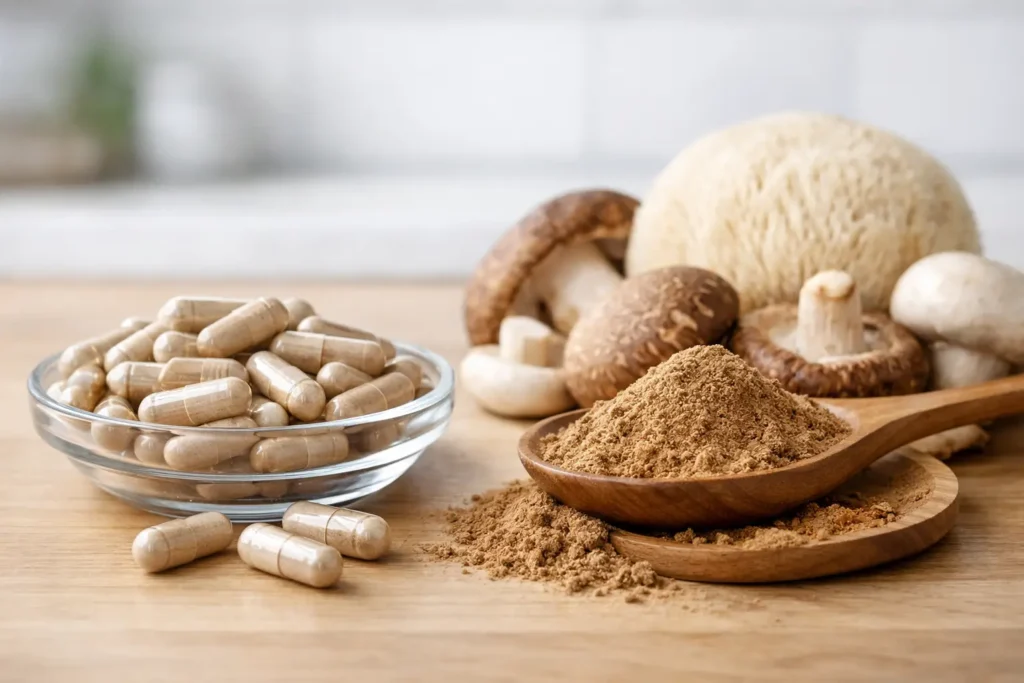
A capsule is easy to take before work. A mushroom powder is easy to inspect, measure, and blend into a routine. That practical difference is the real starting point in capsules versus mushroom powders, not the assumption that one format is automatically stronger or better.
For functional mushroom buyers, the better choice depends on what you value most: convenience, ingredient visibility, flexible serving size, or a clean repeatable routine. The source material, extraction method, and label transparency matter just as much as the format that holds the product.
Capsules Versus Mushroom Powders: The Core Difference
Mushroom capsules contain a pre-measured amount of powdered mushroom material, extract, or a blend of both inside a capsule shell. They are designed for straightforward daily use. You know the serving size before opening the bottle, and there is no scoop, flavor, or mixing step to manage.
Mushroom powders are loose material packaged in a pouch or jar. Depending on the product, that may be finely milled fruiting body powder, an extract powder, or a formulated blend. The format gives the buyer direct access to the material itself, which makes it easier to see texture, color, and consistency from one serving to the next.
Neither format tells the full quality story on its own. A capsule can contain a well-specified fruiting body extract or an unclear blend. A powder can be carefully processed and standardized, or it can be a basic bulk powder with limited sourcing detail. Format is the delivery method. Product specifications are where the more meaningful comparison begins.
When Capsules Make More Sense
Capsules are built for consistency. For buyers taking Lion’s Mane or another functional mushroom as part of a regular wellness routine, a capsule removes several small barriers: measuring, cleaning a spoon, finding a beverage, and working around the earthy taste of mushrooms.
That convenience matters more than it may seem. A product that fits easily into a morning or evening routine is more likely to be used consistently. Capsules also travel well, store cleanly, and make it simple to keep track of servings when you are away from home.
They are especially practical when a formula contains more than one ingredient. A capsule can provide a defined ratio of complementary mushroom extracts without requiring the buyer to measure separate powders. This is useful for customers who prefer a controlled, repeatable format over hands-on preparation.
The trade-off is reduced flexibility. You are limited to the amount contained in each capsule, so making a small adjustment generally means adding or removing a full capsule. Capsules can also make it harder to visually evaluate the powder inside before purchase. That is why a clear label should identify the mushroom species, the material used, and whether the product is an extract or whole-mushroom powder.
Why Some Buyers Prefer Mushroom Powders
Powders offer a more direct relationship with the product. You can measure the amount you want, add it to coffee, tea, smoothies, oatmeal, or a simple beverage, and see the material before it is consumed. For many mushroom enthusiasts, that visibility is part of the appeal.
A loose powder can also be more adaptable than capsules. If your routine changes from day to day, you can incorporate the powder into food or drinks rather than adding another pill to the mix. This format works well for people who already prepare smoothies, functional beverages, or kitchen-based wellness blends.
Powders are not always easier, however. Some have a noticeable aroma, flavor, or texture. Fine powders can clump if they are added to cold liquid without stirring or blending, and measuring requires more attention than taking a capsule. If you want zero preparation, a powder may become an unused container in the cabinet.
The best powder packaging should support product stability. A properly sealed container helps protect the material from moisture and unnecessary air exposure. Storage still matters after delivery: keep powders dry, sealed, and away from direct heat and sunlight.
Check the Mushroom Material, Not Just the Format
A well-made capsule and a well-made powder can both be strong choices. The most useful buying questions are more specific: What mushroom is used? Is it fruiting body material, mycelium, or an extract? Is the product a single-species formula or a blend? Does the label clearly state what is inside?
Fruiting body powders are made from the visible mushroom structure. They appeal to buyers looking for a familiar whole-food style format with minimal processing. Mycelium-based products come from the threadlike fungal network and may be grown on a substrate. Neither term should be treated as a universal quality verdict, but they are not interchangeable materials.
Extract powders are processed to concentrate particular compounds from mushroom material. They are common in functional formulas where consistency and defined specifications are priorities. A quality-focused retailer should distinguish an extract from an ordinary ground powder rather than presenting every mushroom product as if it were identical.
For capsules, check the amount per serving and the number of capsules required to reach that serving. For powders, look for the scoop size or serving guidance and whether the container states the number of servings. These details make price comparisons more accurate than comparing package weight or bottle size alone.
Functional Mushroom Formats and Wild Mushroom Material
Functional powders and capsules should be evaluated separately from raw, wild-sourced mushroom products. This distinction is particularly relevant for specialty Amanita categories, including Amanita muscaria, Amanita pantherina, and Amanita regalis.
Dried wild mushroom caps are botanical material with natural variation in appearance, size, and composition. They are not standardized supplement formats, and they should not be treated as interchangeable with a measured functional mushroom capsule or powder. Their appeal is authenticity and species-specific character, not the uniformity expected from a routine-oriented product.
Responsible product categorization protects the buyer. A clear catalog separates wild-sourced material from processed functional products, describes each category accurately, and avoids suggesting that unusual botanicals are simple substitutes for mainstream wellness supplements. Adults should review product information carefully and make choices appropriate to their own circumstances.
How to Choose the Right Format for Your Routine
Choose capsules when your priority is speed, portability, and a fixed serving. They are usually the more controlled option for a daily schedule, especially if you do not enjoy mushroom flavor or do not want to prepare a drink each time.
Choose powder when you want flexibility and visible material. It is often the better fit for buyers who enjoy creating their own blends, want to combine a functional mushroom with food or beverages, or prefer to control the measured amount more directly.
If you are deciding between two similar products, compare the label before comparing the format. Confirm the species, ingredient form, serving size, container yield, and any extraction details. Also consider whether the product fits the way you actually live. The most impressive specification is less useful if the format never makes it into your routine.
For customers ordering functional mushroom products in the US or Canada, practical factors count too. Reliable fulfillment, secure checkout, intact packaging, and clear product categories support a better purchase experience from the moment you select a format to the moment it reaches your shelf.
A capsule can be the cleanest choice for disciplined daily use, while a powder can make more sense for buyers who value flexibility and hands-on preparation. Start with the mushroom material you want, then choose the format you will use with confidence and consistency.