
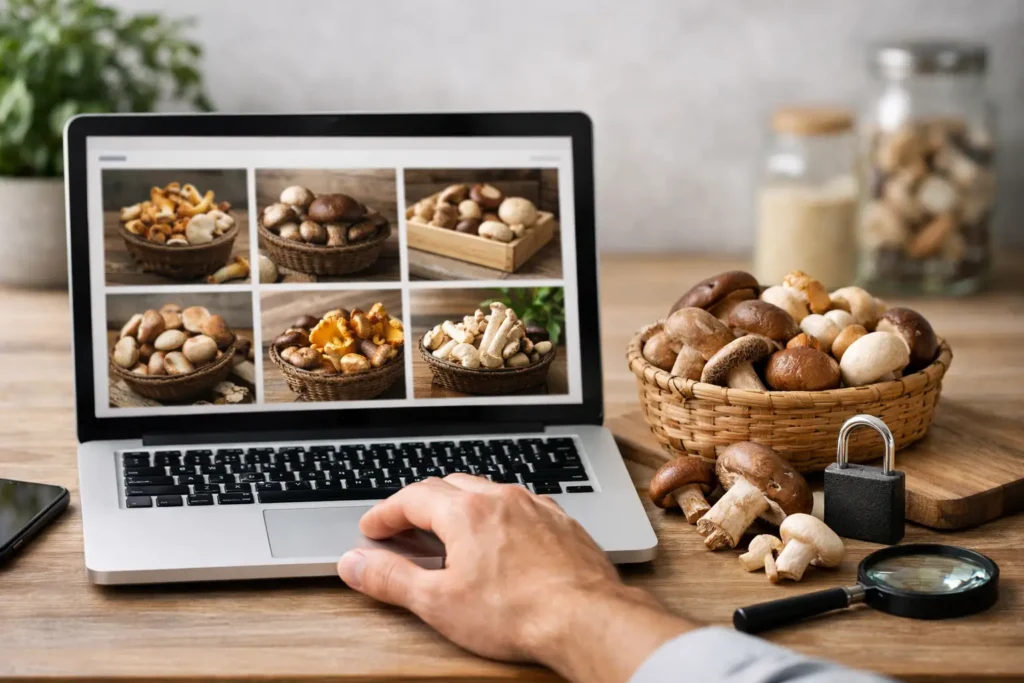
A product called “mushroom powder” can mean several very different things. It may be a fruiting body powder, a mycelium-based product, an extract, a blend, or simply ground wild material. The difference affects what you receive, how consistently it can be used, and whether it fits your purpose. A reliable guide to buying mushrooms online starts with that distinction, not with a dramatic product name or a low price.
For specialty mushroom buyers, the strongest purchase decisions come from matching the format to the category, verifying the seller’s product information, and treating wild botanicals and functional supplements as separate purchases. That approach protects against mislabeled products, unclear sourcing, and expectations a product was never designed to meet.
Start With the Mushroom Category
Before comparing brands, decide whether you are shopping for a functional mushroom product, culinary mushrooms, or wild-sourced botanical material. These categories may share a common name, but they should not be evaluated by the same standards.
Functional mushroom powders and capsules are built for repeatable routines. Products featuring Lion’s Mane and similar functional species may use fruiting body powder, mycelium, extracts, or a defined combination of these materials. A well-organized listing should make the format clear, state the amount per serving, and identify any additional ingredients. Consistency, convenience, and label transparency are usually the priority here.
Wild mushrooms are different. Dried Amanita muscaria, Amanita pantherina, and Amanita regalis caps are natural botanical materials with visible variation in cap size, color, shape, moisture, and condition. That variation is not automatically a quality issue. It is part of buying unmodified, wild-sourced material. What matters is whether the product is accurately identified, presented honestly, and separated clearly from standardized wellness products.
Do not assume that a dried cap has the same purpose, predictability, or labeling standard as a capsule. Likewise, do not assume every powder is an extract or every product labeled “mushroom” contains a meaningful amount of the named species. Product category is the first quality filter.
How to Read an Online Mushroom Listing
A credible listing gives you enough information to understand what is being sold before checkout. You should not need to infer the species, plant part, format, or quantity from photos alone.
For functional products, look for the full species name, the form used, the amount per serving, the total number of servings, and a complete ingredient statement. “Mushroom blend” can be useful only when the blend components and their amounts are disclosed. If the product contains both fruiting body and mycelium, that should be stated directly rather than hidden behind broad wellness language.
For wild mushroom material, the listing should identify the species precisely. Amanita muscaria, Amanita pantherina, and Amanita regalis are not interchangeable names. They are distinct species and should be treated as such. The listing should also explain whether the product is sold as whole caps, cap pieces, powder, or another format, along with the net weight you will receive.
Photos can help set expectations, but they are not a substitute for product specifications. Wild-foraged mushrooms naturally vary from batch to batch, and pictures may show representative material rather than the exact item in your order. Read the description for the purchase details that actually control value: species, form, weight, and product condition.
Verify Quality Without Chasing Empty Claims
Premium positioning should be supported by specifics. Terms such as “pure,” “lab-grade,” or “high quality” mean little if the seller does not explain its product standards. Look for clear category definitions, accurate labeling, professional packaging, and evidence that the business understands the products it carries.
For supplement-style functional mushrooms, testing and quality-control practices are especially relevant. A responsible retailer should be able to describe the product’s ingredients and manufacturing standards without relying on vague promises. Depending on the product, buyers may also look for information related to identity verification, contamination screening, or standardized extract details. The exact documentation available will vary by product type, but the seller should not be evasive when a customer asks a reasonable question.
With wild botanicals, authenticity and correct identification matter first. Wild material is not inherently standardized, and it should not be marketed as though every cap offers identical characteristics. Be cautious of sellers that make certainty-heavy claims about an unmodified natural product. Clear, limited, accurate descriptions are more credible than inflated promises.
Price is useful context, not proof of quality. An unusually low price can reflect smaller quantities, mixed-grade material, unclear sourcing, or a product format that is not comparable to the one you intended to buy. Compare price by net weight, species, form, and stated quality information. A lower listed price is not a better value if it leaves key facts unanswered.
A Guide to Buying Mushrooms Online: Safety and Legality
Specialty mushrooms require more care than ordinary pantry items. Check the laws and regulations that apply where you live before placing an order, particularly for wild Amanita products. Retail availability does not replace your responsibility to understand local rules, product restrictions, and any applicable import or shipping limitations.
Read all product warnings. Some mushroom products are not appropriate for everyone, and raw botanical materials should never be treated casually. If you are pregnant, nursing, managing a medical condition, taking medication, or have concerns about interactions, speak with a qualified healthcare professional before using any new supplement or botanical product.
Amanita species deserve an additional level of caution. They are not conventional culinary mushrooms, and raw wild-sourced caps should not be confused with a standardized functional supplement. Avoid sellers that frame them as casual wellness items, promise specific outcomes, or blur the line between botanical material and a routine dietary product. Accurate category separation is a sign that a retailer is taking the product seriously.
Never rely on social media comments, anonymous forums, or a product review to override a clear warning label. Reviews can describe shipping and packaging, but they cannot establish whether a product is appropriate for you or whether a claimed effect is reliable.
Assess the Retailer Before You Pay
A polished product page is only one part of a trustworthy online purchase. Check whether the retailer has clear policies for shipping, order processing, payment security, customer support, and damaged or incorrect orders. These details reveal how the business operates when something does not go exactly as planned.
Secure checkout is a baseline expectation, but it is still worth confirming that the site uses normal payment protections and provides an order confirmation. Review the shipping policy before purchasing, especially if you are ordering temperature-sensitive items, products subject to regional restrictions, or a large quantity that qualifies for free shipping. Fast processing is valuable, but clear communication matters just as much.
Product packaging also matters. Functional powders and capsules should arrive in containers appropriate for protecting the product from moisture and handling. Dried mushroom caps should be packed to reduce unnecessary breakage while recognizing that fragile natural material can shift in transit. If your order arrives damaged, document the package and product promptly, then contact the seller through its stated support channel.
For buyers in the United States and Canada, confirm that the retailer serves your delivery area before building a cart around a particular product. This is especially useful with specialty categories, where shipping eligibility can differ by item rather than by the store as a whole.
Choose the Format That Fits Your Purpose
The right format depends on what you value most. If you want a product that is simple to incorporate into a regular routine, capsules or clearly labeled powders offer measured servings and easy storage. If you want species-specific, unmodified material and understand the inherent variation of wild-sourced products, whole dried caps or cap pieces may be the more appropriate category.
Do not buy a wild product because you expected supplement-like consistency. Do not buy a capsule because you expected the character of whole, natural mushroom material. Each can be a valid choice, but they answer different needs.
Mario’s Mushrooms organizes wild Amanita offerings separately from functional powders and capsules for this reason. The distinction makes it easier to compare like with like and purchase with a clear understanding of the material in your cart.
Before submitting payment, take one final pass through the listing: verify the species, format, net weight or serving count, ingredients, warnings, and shipping details. That minute of review is usually more valuable than another hour spent comparing promotional claims. Buy products that are identified clearly, sold by a retailer with visible standards, and suited to the category you actually intend to purchase.