
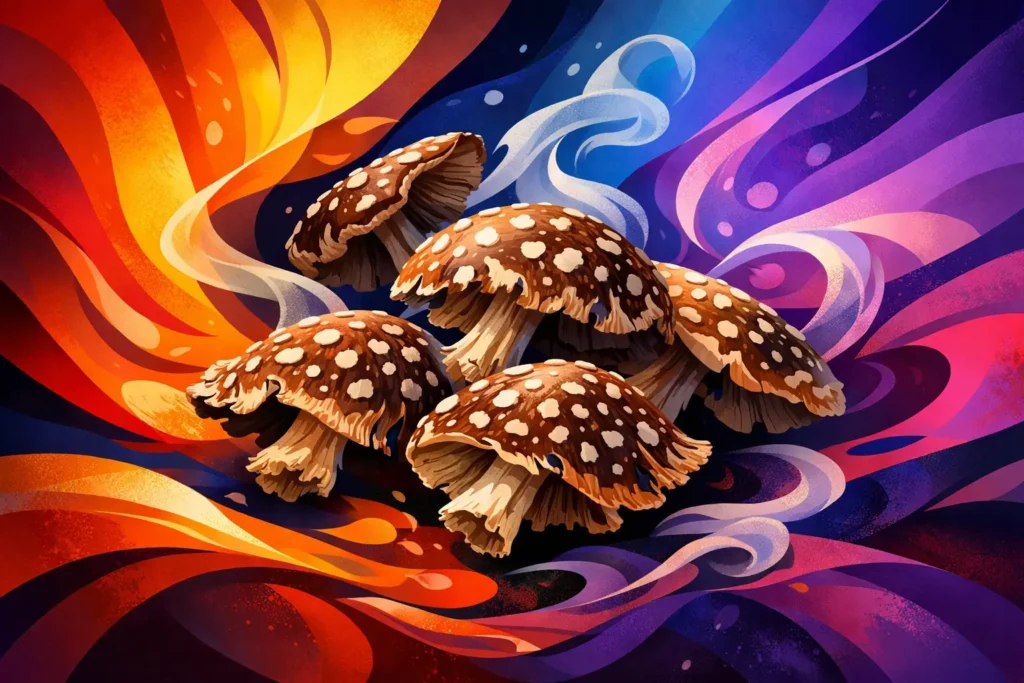
If you are looking at amanita pantherina dried caps, you are not shopping a generic mushroom category. You are evaluating a wild botanical product with real variation from cap to cap, batch to batch, and species to species. That difference matters because experienced buyers are usually not just asking what it is – they are asking how cleanly it was dried, how intact the caps are, how it was categorized, and whether the seller treats it like a distinct product rather than a novelty add-on.
What amanita pantherina dried caps actually are
Amanita pantherina is a wild Amanita species valued by niche mushroom buyers who want whole-cap material rather than powders, blends, or heavily processed formats. In dried cap form, the product stays close to its natural state. That is part of the appeal. Buyers who prefer raw ethnobotanical material often want visible morphology, species-specific sourcing, and a product that has not been reformulated into a more standardized supplement.
This is also where expectations need to stay precise. Dried caps are not the same thing as a measured extract, a capsule, or a functional mushroom powder intended for daily routine use. They are wild-harvested botanical material. That means authenticity is often higher in a visual sense, but uniformity is usually lower than it would be in a processed product designed around consistency.
Why buyers choose dried caps instead of powders or capsules
For this audience, dried caps solve a different need than wellness-focused mushroom products. A whole cap gives the buyer a clearer connection to the original fruiting body. You can inspect size, surface condition, color range, and general integrity in a way that is impossible with a fine powder. For experienced niche customers, that level of visibility is often part of the purchase decision.
There is also a category logic behind it. Functional mushrooms are often selected for repeatability. Lion’s Mane powders, capsules, and similar formats are usually purchased because they fit a routine and offer easier serving control. Amanita pantherina dried caps sit in a different lane. The value is in botanical specificity and natural form, not convenience.
That does create trade-offs. Whole caps are more interesting to inspect and often more desirable to collectors and experienced ethnobotanical buyers, but they are less standardized. If you want a product that feels highly uniform from one use case to the next, dried wild caps are rarely the most controlled format.
How to evaluate amanita pantherina dried caps
The strongest listings do not rely on vague claims. They make the category easy to understand and give you clear signals about what you are buying.
Cap integrity and visual quality
Intact caps generally signal better handling than crushed or heavily fragmented material. Some breakage is normal in dried wild mushrooms, especially in shipping, but a premium product should still show careful processing and packing. Buyers usually prefer caps that retain recognizable form, with visible shape and minimal unnecessary damage.
Color can vary, and that is normal with natural material. You are looking less for a perfectly identical appearance and more for signs of clean drying and proper storage. A dull or uneven cap is not automatically low quality, but excessive crumbling, obvious contamination, or mixed material should raise questions.
Clean drying and moisture control
Drying is one of the most important quality points. Caps should be thoroughly dried for stability in storage. If residual moisture is too high, product quality can degrade faster and handling becomes less reliable. Cleanly dried caps tend to feel light, stable, and suitable for longer shelf life when stored correctly.
This is one reason serious retailers distinguish premium dried caps from loosely handled wild mushroom stock. Good drying is not just about preservation. It is about maintaining condition during fulfillment and transit.
Species clarity and product categorization
A trustworthy product page should identify the species clearly and avoid blurring raw wild mushrooms with functional supplement language. That distinction matters. Amanita pantherina dried caps should be presented as a wild botanical product, not folded into a general wellness category as if all mushroom formats serve the same purpose.
Clear segmentation is a sign of operational control. It shows the seller understands that a wild-sourced Amanita cap and a standardized mushroom capsule are different product types with different buyer expectations.
What premium sourcing looks like
In this category, premium does not mean artificially uniform. It means the product has been sourced, identified, dried, and packed with care. Wild mushrooms always carry some natural variability, and trying to market them as identical is usually a red flag rather than a quality signal.
A better indicator is how transparently the product is handled. Premium sourcing often shows up in practical ways: cleaner cap selection, clearer species labeling, more careful separation of grades, and more dependable order processing. The operational side matters because a niche product can still be sold poorly if the retailer treats fulfillment, storage, and categorization as an afterthought.
That is where a specialized seller has an edge over a broad marketplace merchant. Customers in this niche tend to want a retailer that understands mushrooms as categories, not just SKUs.
Amanita pantherina dried caps vs functional mushrooms
This comparison helps prevent a common buying mistake. Amanita pantherina dried caps are chosen for their identity as a raw wild mushroom product. Functional mushroom powders and capsules are usually chosen for routine use, convenience, and a more repeatable customer experience.
Neither format is inherently better. It depends on what you want. If your priority is natural whole-material authenticity, dried caps make sense. If your priority is a stable daily product with easier handling, a processed functional mushroom format is usually the better fit.
The confusion starts when shoppers assume all mushroom products belong to one wellness shelf. They do not. A catalog that separates ethnobotanical Amanita offerings from standardized functional mushroom products is easier to shop because it respects how different these categories really are.
Storage and handling after delivery
Once amanita pantherina dried caps arrive, storage becomes part of product quality. Even a well-prepared batch can decline if it is exposed to heat, moisture, or repeated humidity changes. A cool, dry, dark storage environment is the basic standard.
Packaging also matters after opening. If the original package is resealable and moisture resistant, that helps preserve condition. If not, transferring the caps to a properly sealed container is the safer move. The goal is simple: keep the product dry, stable, and protected from unnecessary handling.
Because these are dried caps rather than a compressed supplement format, physical care matters too. Rough storage can turn a cleaner batch into fragmented material over time. Buyers who value intact caps should handle them accordingly.
What experienced buyers tend to notice first
New shoppers often focus on the product name alone. Experienced buyers usually look at the condition details behind the name. They want to know whether the caps appear whole, whether the listing reflects species-specific understanding, and whether the retailer presents wild mushrooms with the same control it applies to order processing and checkout.
They also notice whether the business is trying to oversell mystery. In this space, credibility comes from precision. Clear category distinctions, straightforward product descriptions, and visible quality standards do more than dramatic copy ever will. That is one reason specialized retailers like Mario’s Mushrooms tend to appeal to informed customers – the presentation is organized, product-forward, and easier to trust.
Who this format is best for
Amanita pantherina dried caps are best suited to adult buyers who already understand the difference between raw mushroom material and processed mushroom supplements. If you value seeing the original form of the mushroom, assessing cap condition yourself, and purchasing a product that stays close to its wild identity, this format fits that preference well.
If you are looking for convenience, routine use, or a more standardized mushroom product, you may be happier in a different category. That is not a knock on dried caps. It is just a reminder that the best product is the one that matches the reason you are buying it.
A strong mushroom catalog should make that decision easier, not blur the lines. When amanita pantherina dried caps are sourced carefully, categorized clearly, and shipped with real attention to quality, they offer exactly what experienced niche buyers are usually after: authentic wild material presented with control, clarity, and respect for the product itself.
The smartest purchase usually starts with a simple question – do you want natural whole-cap character, or do you want standardized convenience? Once that answer is clear, the right product tends to stand out fast.