
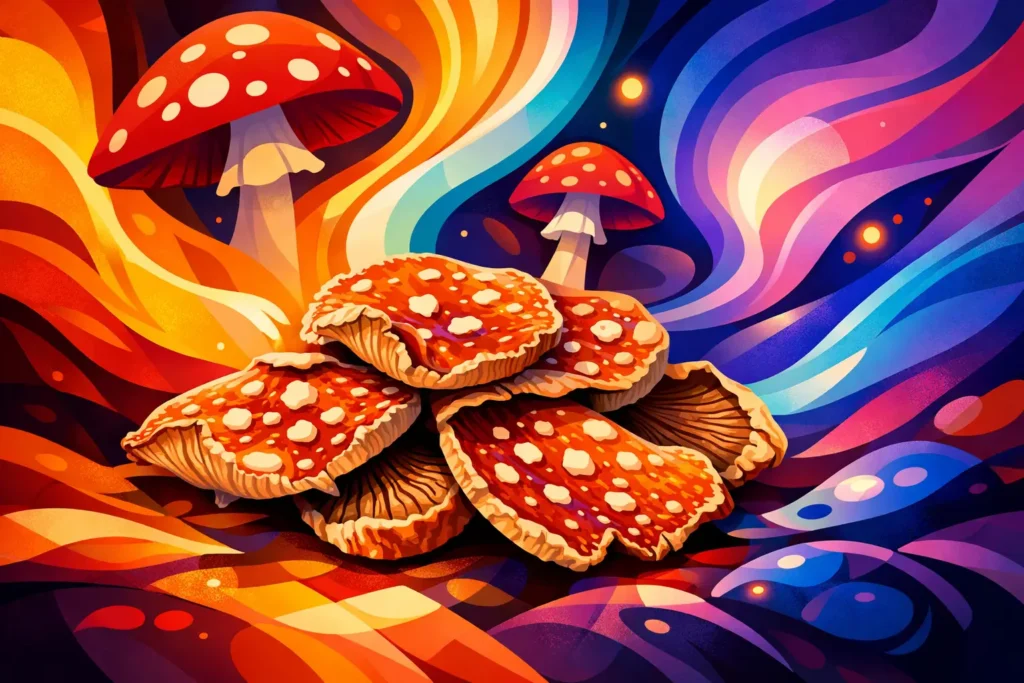
If you are shopping for amanita muscaria dried caps, the main decision is not just where to buy them. It is whether you want raw, wild-sourced mushroom material with natural variation or a more standardized mushroom format built for repeatable use. That distinction matters because Amanita products sit in a very different category from functional mushroom powders, capsules, and extracts.
For experienced buyers, dried caps are appealing precisely because they are minimally altered. They retain the character of the original fruiting body, including visual variation in cap size, color, and shape. For newer shoppers, that same natural variation can be confusing at first. Premium quality in this category is less about perfectly identical pieces and more about clean material, proper drying, reliable sourcing, and clear product categorization.
What amanita muscaria dried caps actually are
Amanita muscaria dried caps are the cap portions of wild Amanita muscaria mushrooms that have been harvested and dried for storage and sale. In retail terms, this is a raw botanical product. It is not the same thing as an extract, not the same as a powdered functional mushroom supplement, and not the same as a standardized capsule designed around uniform active content.
That raw format is exactly why many enthusiasts seek it out. The cap is the most recognizable part of the mushroom and often the portion buyers specifically prefer when they want a traditional, whole-material presentation. Because these are wild mushrooms, one batch may look somewhat different from the next. Season, region, maturity at harvest, and drying conditions all influence the final appearance.
This is also where good retail presentation matters. A specialized mushroom seller should make it obvious when a product is wild-sourced dried material versus a processed wellness product. That level of separation helps customers buy with the right expectations.
Why buyers choose dried caps instead of powders or capsules
Some customers want botanical authenticity over convenience. Dried caps appeal to that buyer because the material remains close to its harvested form. There is no need to wonder whether the product is mostly filler, whether it includes grain-grown mycelium, or whether the texture and appearance match the original mushroom. What you see is the mushroom itself, dried for stability.
That said, raw caps are not always the easiest fit for every customer. Powders and capsules are often simpler to store, measure, and repurchase on a routine schedule. They are also more familiar to shoppers who come from the broader supplement market. If your priority is consistency and convenience, processed formats may feel more practical. If your priority is unmodified wild material, dried caps are usually the better match.
The trade-off is straightforward. Raw material offers authenticity and direct botanical identity. Processed formats offer convenience and easier standardization. Neither is automatically better in every case. It depends on what kind of mushroom buyer you are.
How to evaluate amanita muscaria dried caps
The strongest quality signal is clarity. A trustworthy product listing should tell you exactly what the material is, how it is categorized, and whether it is sold as dried caps rather than mixed mushroom fragments or an unspecified blend. When a retailer is precise about format, customers can make cleaner comparisons.
Visual quality also matters. Well-handled dried caps should appear properly dried, reasonably intact for the grade being sold, and free from obvious excess debris. Natural variation is expected, but the product should still look like it was selected and packed with care. Deep breakage, poor color retention, or signs of moisture exposure can suggest weaker handling standards.
Aroma can be another useful indicator when the product arrives. Dried mushroom material should smell clean and characteristic of the mushroom, not stale, sour, or damp. Texture matters too. Caps should feel dry and stable, not soft from residual moisture.
Packaging is easy to overlook, but it matters more than many buyers realize. Dried mushrooms need protection from humidity, light, and rough handling during shipping. Secure packaging helps preserve condition from warehouse to doorstep, especially in ecommerce where product integrity depends on transit performance as much as harvest quality.
Sourcing and batch variation
With wild Amanita products, sourcing is part of the product story. These are not factory-made goods with perfectly identical outputs every time. Even in premium batches, some caps will be broader, some more curled, and some richer in color than others. That does not automatically indicate inconsistency in a negative sense. It reflects the reality of a wild botanical category.
What matters is whether the variation stays within a well-managed quality range. Reliable sellers understand how to sort, dry, and package wild material so buyers receive a product that feels premium even though it remains naturally variable. That balance between authenticity and control is what separates serious mushroom retail from generic novelty listings.
For knowledgeable customers, this is often a positive sign. It confirms that the product has not been overprocessed into something detached from its natural form. Still, the seller should communicate clearly so customers know what to expect before ordering.
Amanita muscaria dried caps vs functional mushrooms
This distinction deserves a direct explanation because many online shoppers browse both categories on the same site. Amanita muscaria dried caps belong in the raw ethnobotanical lane. Functional mushrooms such as Lion’s Mane powders or capsules are typically positioned around routine wellness use, convenience, and product consistency.
Those are different purchase motivations. One customer may want wild-foraged material with visible identity and traditional appeal. Another may want a standardized powder that fits into a daily stack. A specialized retailer should not blur those lines. Clear segmentation helps customers understand whether they are buying a raw mushroom specimen or a processed supplement-style product.
That is one reason focused shops such as Mario’s Mushrooms stand out. The strongest mushroom retailers do not force every product into the same narrative. They define categories clearly, maintain quality expectations within each category, and let the customer choose between natural authenticity and repeatable usability.
Storage and handling after delivery
Once amanita muscaria dried caps arrive, storage becomes your responsibility. The goal is simple: keep the material dry, protected from humidity, and out of prolonged direct light. A sealed container in a cool, dry place is generally the right baseline. If the original packaging is high quality and resealable, many buyers continue using it.
Moisture is the main enemy. Even premium dried mushroom material can degrade if it is repeatedly exposed to humid air. Frequent opening and poor resealing can reduce stability over time. If you buy a larger amount, dividing it into smaller sealed portions can help preserve the rest of the batch.
Handle the caps gently if appearance matters to you. Dried mushroom material becomes more fragile over time, and extra handling can increase breakage. That does not necessarily ruin the material, but it can reduce the presentation quality buyers often care about in whole-cap formats.
What premium really means in this category
In mainstream supplements, premium often means branding, flavor systems, and polished packaging. In wild mushroom retail, premium means something more specific. It means the material was sourced carefully, dried correctly, sorted with attention, packaged securely, and presented with accurate product definitions.
It also means the seller understands the category well enough to avoid vague claims. Amanita products should be described with precision, not hype. Experienced customers usually respond better to controlled, factual product framing than exaggerated language. If a retailer cannot explain what makes a raw dried cap product distinct from a powder, capsule, or extract, that is usually a sign the category is not being handled with enough seriousness.
Fast order processing and secure checkout matter too, especially in specialty mushroom ecommerce. Product quality is only part of the buyer experience. Reliability in fulfillment, clear inventory presentation, and straightforward ordering all reinforce trust.
Who dried caps are best for
Amanita muscaria dried caps are best suited to buyers who specifically want whole, wild-sourced mushroom material and understand that natural products do not behave like standardized supplements. They tend to appeal to mushroom hobbyists, ethnobotanical shoppers, and experienced niche customers who care about format as much as they care about the species itself.
They may be less suitable for customers who want a simple capsule routine, highly uniform servings, or a mushroom product that feels interchangeable from one order to the next. Those buyers are often better served by functional mushroom formats with tighter processing controls.
The right product is the one that matches your expectations. If you want the original character of the mushroom, dried caps make sense. If you want a more systematized product experience, another format may fit better.
A good mushroom purchase starts with category clarity. Once you know whether you want raw botanical material or a more standardized mushroom product, the rest of the decision gets much easier.