
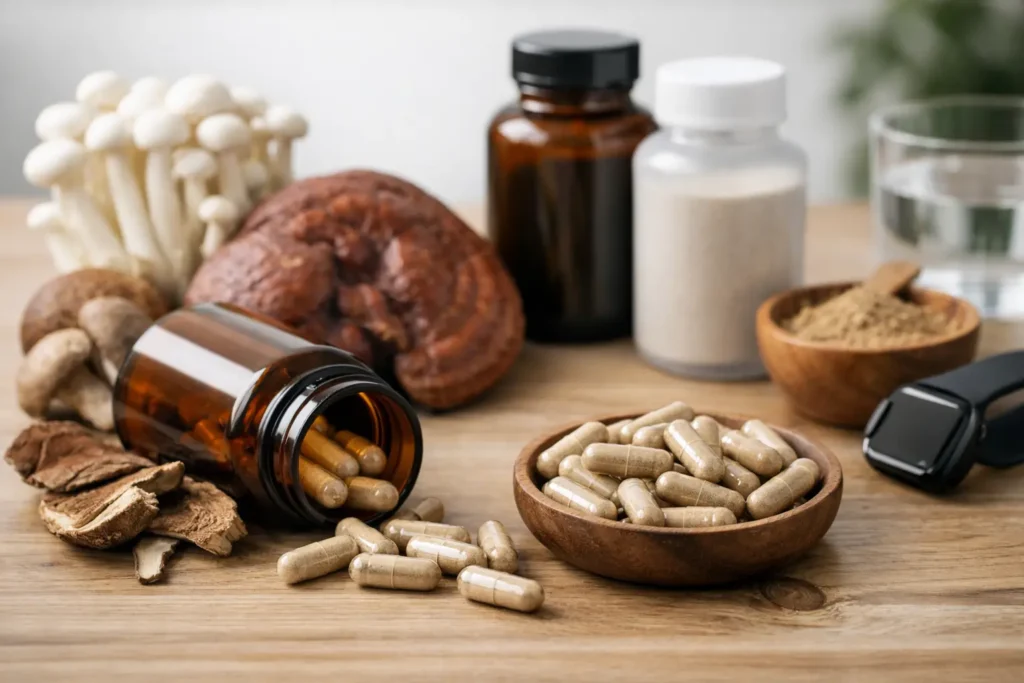
A mushroom capsule can look simple on a product page: a species name, a milligram amount, and a bottle count. The meaningful differences are usually on the label. Knowing how to choose mushroom capsules starts with separating the mushroom itself from the format, the processing method, and the purpose you want the product to serve.
For someone building a consistent functional mushroom routine, a standardized capsule may be the most practical choice. For a buyer seeking unmodified wild botanical material, capsules may not be the appropriate category at all. Those are different purchasing decisions, and a reliable retailer should make the distinction clear.
Start With the Mushroom Category
The first question is not “Which capsule is strongest?” It is “What kind of mushroom product am I actually buying?”
Functional mushroom capsules are typically made for repeatable use. They may contain powdered fruiting bodies, mushroom extracts, or a combination of both. Lion’s Mane is a common example in this category. These products are generally selected by people who want a convenient, measured format that fits into a regular wellness routine.
Wild ethnobotanical mushrooms are a separate category. Amanita muscaria, Amanita pantherina, and Amanita regalis are distinctive wild species with natural variation between individual specimens and harvests. Dried caps preserve the character of the raw mushroom material. That is fundamentally different from a standardized capsule, even if both products use the word “mushroom.”
Do not assume that a capsule containing a mushroom name is equivalent to a dried cap, a traditional preparation, or another form of the same species. Processing changes the format, and sometimes the intended use. Read the category description before comparing prices or milligram counts.
How to Choose Mushroom Capsules by Ingredient Type
Once you have identified a functional mushroom capsule, look at what is inside it. The best option depends on whether you prioritize whole-mushroom simplicity, extract concentration, or a blend designed for convenience.
Fruiting body powder
Fruiting body powder is made from the visible mushroom structure. Buyers often prefer it because it is clearly tied to the part of the fungus most people recognize as the mushroom itself. A straightforward fruiting body capsule can be a good fit when you want a minimally complicated ingredient panel and a whole-food-style format.
That said, powder is not automatically better than an extract. It is simply a different format. Its value depends on the species, sourcing standards, processing quality, and whether the product matches your intended routine.
Extracts
An extract uses water, alcohol, or another controlled process to concentrate selected mushroom compounds. Extract labels may identify an extraction ratio, such as 8:1, or list measured compounds such as beta-glucans. These details can help you compare products, but they need context.
A high extraction ratio does not, by itself, prove quality. It tells you that material was concentrated, not which compounds were retained, how they were measured, or whether the starting material was strong. Similarly, a large milligram number can describe total extract weight without revealing the quality of the mushroom source.
Choose extracts when you value a more standardized format and the manufacturer provides enough label detail to understand what the number represents.
Mycelium and grain-based material
Mycelium is the root-like network of a fungus. It can be a legitimate mushroom ingredient, but buyers should know whether a product contains pure mycelium, mycelium grown on grain, or primarily grain substrate with fungal biomass. These are not interchangeable with fruiting body powders.
There is no universal rule that makes one format right for every person. The key is accurate labeling. If a product does not clearly identify its material, treat that lack of detail as a reason to keep looking.
Read the Supplement Facts Panel, Not Just the Front Label
Front-label language is designed to be quick to scan. The Supplement Facts panel is where a capsule earns your confidence. Check the serving size first. Some brands advertise the amount per two capsules, while others list the amount per capsule. Comparing bottle-to-bottle without noticing this detail can make a lower-priced product appear more concentrated than it is.
Then review the species name. A label should identify the mushroom clearly, ideally with both its common and botanical name. “Mushroom complex” is broad language. It may be useful for a blend, but it makes it harder to know how much of each species you are receiving.
Also look for the form of the ingredient: fruiting body powder, extract, mycelium, or a blend. If standardized compounds are claimed, the label should state what is standardized and in what amount or percentage. Specificity is a quality signal because it gives you something real to compare.
Finally, inspect the inactive ingredients. Capsule shell materials, flow agents, and fillers are common, but a clean formula should be easy to understand. If you avoid certain allergens or follow a plant-based diet, verify the capsule material rather than assuming every capsule is the same.
Prioritize Testing, Traceability, and Honest Claims
Mushrooms can accumulate compounds from their growing environment. That makes sourcing and testing especially relevant. A seller does not need to bury you in laboratory jargon, but it should be able to communicate clear quality controls for identity, purity, and contaminants appropriate to the product category.
Look for transparent sourcing statements and consistent product descriptions. Wild-harvested products should be presented as wild material, with the natural variability that comes with that designation. Functional capsules should be presented as processed supplements, with their ingredient form and serving details clearly stated.
Be cautious with products that promise dramatic outcomes, use vague proprietary blends, or rely on phrases such as “maximum strength” without supporting label information. A premium mushroom capsule should be specific before it is flashy.
For specialty mushrooms, botanical identity matters just as much as potency language. Common names can be used loosely in the market. A precise Latin name, a defined product format, and clear handling information are stronger signs of a controlled catalog.
Match the Capsule Format to Your Actual Routine
Capsules are useful because they remove preparation from the equation. They are portable, measured, and easy to keep consistent. That convenience has trade-offs: you cannot visually inspect the raw mushroom material, and you are relying more heavily on the manufacturer’s labeling and quality controls.
Consider how often you realistically plan to use the product. A larger bottle can offer better value per serving, but only if it fits your routine and you can store it properly in a cool, dry place. For a first purchase, a smaller format may be the more sensible way to assess capsule size, label clarity, and personal tolerance.
Capsule count matters, but cost per serving is the better comparison. Divide the bottle price by the number of labeled servings, then compare like with like. A 60-capsule bottle may contain 60 servings or only 30, depending on the serving size.
If you are taking prescription medications, managing a health condition, pregnant, nursing, or preparing for a procedure, speak with a qualified healthcare professional before adding a supplement. Supplements are not a replacement for medical care, and individual considerations matter more than a generic product recommendation.
Keep Amanita Products Separate From Functional Capsules
This distinction deserves direct attention. Amanita mushrooms should not be treated as interchangeable with functional mushroom supplements such as Lion’s Mane. They have different botanical profiles, different product traditions, and different considerations around preparation, handling, and local regulations.
A dried Amanita cap is raw, wild-sourced botanical material. Its appearance, size, and natural characteristics can vary. A functional capsule is a processed format intended to provide a defined serving experience. One is not a stronger or weaker version of the other – they are separate product categories.
Avoid choosing an Amanita-related product based on supplement-style assumptions. Verify the species, review the retailer’s product categorization, understand the legal status where you live, and follow all product-specific information. If a listing blurs the line between wild Amanita material and everyday functional wellness capsules, that is a reason to pause.
A Practical Buying Standard
A dependable mushroom capsule gives you enough information to make a controlled decision: the species, the mushroom part or extract type, the serving size, the other ingredients, and the quality approach behind the product. It should also be sold by a retailer that keeps functional supplements and specialty wild mushrooms clearly organized instead of treating every mushroom format as the same.
Mario’s Mushrooms approaches this difference directly, separating wild-sourced Amanita products from functional mushroom formats so customers can purchase with a clearer understanding of what each category represents.
The right capsule is rarely the one with the loudest front label. Choose the product whose identity, format, and labeling are clear enough that you would know exactly what you are buying before it reaches your cabinet.