
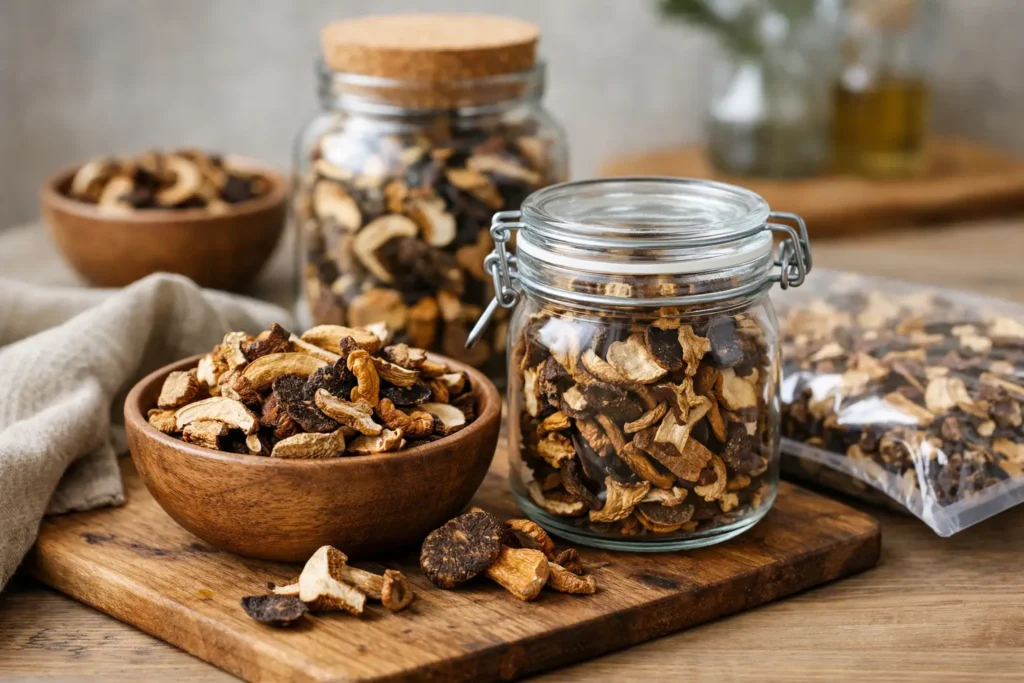
A bag of dried mushroom caps can look unchanged long after its best quality has passed. That is why a reliable guide to dried mushroom shelf life starts with more than a date on the label. The real indicators are dryness, packaging integrity, storage conditions, and the product category in your cabinet.
For premium wild-sourced caps, preserving the original condition matters. For functional mushroom powders and capsules, consistent storage supports a dependable routine and protects the format you purchased. Both benefit from the same core principle: keep moisture, heat, light, and frequent air exposure under control.
What Determines Dried Mushroom Shelf Life?
Properly dried mushrooms are naturally stable because dehydration removes the moisture that supports mold and rapid spoilage. Stable does not mean permanent. Over time, exposure to air, humidity, temperature swings, and light can reduce aroma, change texture, and diminish the overall quality of the material.
A realistic shelf-life window depends on the product. Whole dried caps stored in airtight, light-protective packaging often maintain good physical quality for one to three years. Vacuum-sealed or professionally packaged products may remain in good condition longer when kept in a cool, dry environment. Powders and capsules can have a shorter practical quality window after opening because their larger surface area is exposed each time the container is opened.
The original drying process also matters. A cap that was thoroughly dried and packed promptly begins with a much stronger foundation than material that retained hidden moisture. This is one reason quality sourcing and controlled handling matter before a package ever reaches the customer.
Whole Caps, Broken Pieces, and Powder Do Not Age the Same Way
Whole caps generally hold up best. Their intact structure limits the amount of material exposed to oxygen and ambient humidity. Broken pieces are still suitable for storage, but they have more exposed edges and should be kept especially well sealed.
Fine powders are the most sensitive format. They can absorb moisture quickly, clump, and lose their clean texture if the container is left open or stored near steam. Capsules protect the powder inside, but the bottle should still be closed firmly and kept away from humid areas.
For wild Amanita products, natural variation is part of the material. Cap size, color, surface texture, and minor visual differences can reflect the species, harvest, and drying process. Storage should preserve those characteristics, not be expected to make every piece look identical.
The Best Storage Setup for Dried Mushrooms
The ideal storage space is cool, dark, dry, and consistent. A closed pantry, cupboard, or cabinet away from the stove, dishwasher, and direct sun is usually a better choice than an open shelf. The goal is to avoid the daily temperature and humidity shifts that quietly degrade dried botanicals.
Keep mushrooms in their original sealed packaging when that packaging is designed for barrier protection. If you need to transfer them, use a clean, fully dry, airtight glass jar or high-quality food-storage container. For long-term storage, opaque containers or a dark cabinet add useful protection from light.
Avoid storing dried mushrooms in these locations:
- Above or beside the stove, where heat and cooking steam are constant
- In a bathroom, laundry room, garage, or basement with variable humidity
- On a windowsill or countertop exposed to daylight
- In a loosely folded paper bag or unsealed plastic bag
- In the refrigerator unless the package is fully moisture-proof and condensation risk is controlled
Refrigerators and freezers sound like obvious preservation tools, but they can create problems for dried products. Every removal from a cold environment can introduce condensation if the package is opened before it reaches room temperature. For most customers, a stable pantry setup is simpler and more reliable.
Use Desiccants Carefully
A food-safe desiccant packet can help protect an opened container from humidity, particularly in warm or coastal climates. It should remain intact and separate from the mushroom material. Replace it if it becomes saturated or if the packaging indicates it is no longer active.
Oxygen absorbers and desiccants are not interchangeable. A desiccant manages moisture. An oxygen absorber reduces oxygen in a properly sealed package. Neither can restore product that has already become damp, musty, or contaminated.
How to Check Whether Dried Mushrooms Are Still in Good Condition
A quick inspection before use is a sensible habit, especially with a package that has been open for months. Start with texture. Properly dried caps should feel dry and firm or brittle, not soft, flexible, tacky, or sponge-like. Some natural variation is normal, but a noticeable return of moisture is a clear warning sign.
Then check the aroma. Dried mushrooms have their own earthy, botanical scent. They should not smell sour, sharply musty, rancid, or like a damp storage area. A stale scent can suggest quality loss even when the material looks acceptable.
Visual checks matter too. Discard material with visible mold, fuzzy growth, wet spots, unexplained residue, insect activity, or signs that the package has been exposed to moisture. Do not try to dry it again, pick around affected areas, or rely on appearance alone to make questionable material acceptable.
Color change by itself is less definitive. Natural dried mushrooms may darken somewhat over time, and wild-sourced caps are not expected to have factory-uniform color. The more meaningful concern is a combination of discoloration with moisture, odor changes, or altered texture.
If you cannot confidently assess the condition, treat the product as unsuitable. Storage practices preserve quality, but they do not correct improper handling or provide a guarantee about identity, purity, or safety after the package has left controlled storage.
A Practical Guide to Dried Mushroom Shelf Life After Opening
Opening a package changes the storage equation. Each opening introduces fresh air and, depending on the room, humidity. The solution is not to overcomplicate the process. Open the package only as long as needed, reseal it fully, and return it to its storage location right away.
For customers who purchase larger quantities of dried caps, dividing the product into several small airtight containers can be useful. Keep one container in regular rotation and leave the others sealed until needed. This limits repeated exposure across the full purchase.
For powders, use a clean and completely dry scoop. Never return unused powder to the container, and do not use a scoop that has been near liquids or steam. For capsules, avoid leaving the bottle open on a counter while preparing other items. These small habits help maintain the dry, stable condition that the format requires.
Labeling Makes Long-Term Storage Easier
Write the purchase date and the date opened on the container or outer package. This is especially useful when you keep more than one species, format, or batch on hand. Clear labeling supports the same product distinction that should guide every purchase: raw wild-sourced material and processed functional formats should be stored, identified, and evaluated according to what they are.
A practical rotation system also helps. Use the oldest properly stored package first, while keeping newer sealed products in reserve. This is more dependable than waiting for a product to look old.
Shelf Life Is About Quality, Not Just a Calendar Date
A best-by date is a quality benchmark, not a substitute for proper storage or a condition check. A package may remain dry and visually sound beyond that date if it was sealed and stored well. On the other hand, a recently purchased product can degrade early if it is exposed to humidity or left in a hot vehicle, kitchen, or sunny room.
For specialty wild mushroom caps, preserving the physical material is central to the purchase. For functional powders and capsules, storage consistency supports the repeatable experience those formats are designed to offer. In either case, the strongest approach is controlled packaging, clear labeling, and regular inspection rather than guesswork.
Give dried mushrooms the same level of care you expect from the product itself: store them dry, sealed, dark, and stable. A few deliberate storage choices protect the quality of premium material far better than a date alone ever can.