
A useful amanita regalis review should begin with a fact that is easy to overlook: this is a wild Amanita species, not a casual wellness mushroom and not a standardized supplement. Its appeal comes from its distinctive botanical identity, dramatic appearance, and limited availability. Those same qualities make accurate sourcing, clear labeling, and cautious product evaluation non-negotiable.
Amanita regalis is often grouped into the same conversation as Amanita muscaria and Amanita pantherina. That comparison is understandable, but it can also blur meaningful differences. Buyers who care about species authenticity should assess regalis on its own merits rather than treating every dried Amanita cap as interchangeable.
Amanita Regalis Review: Start With the Species
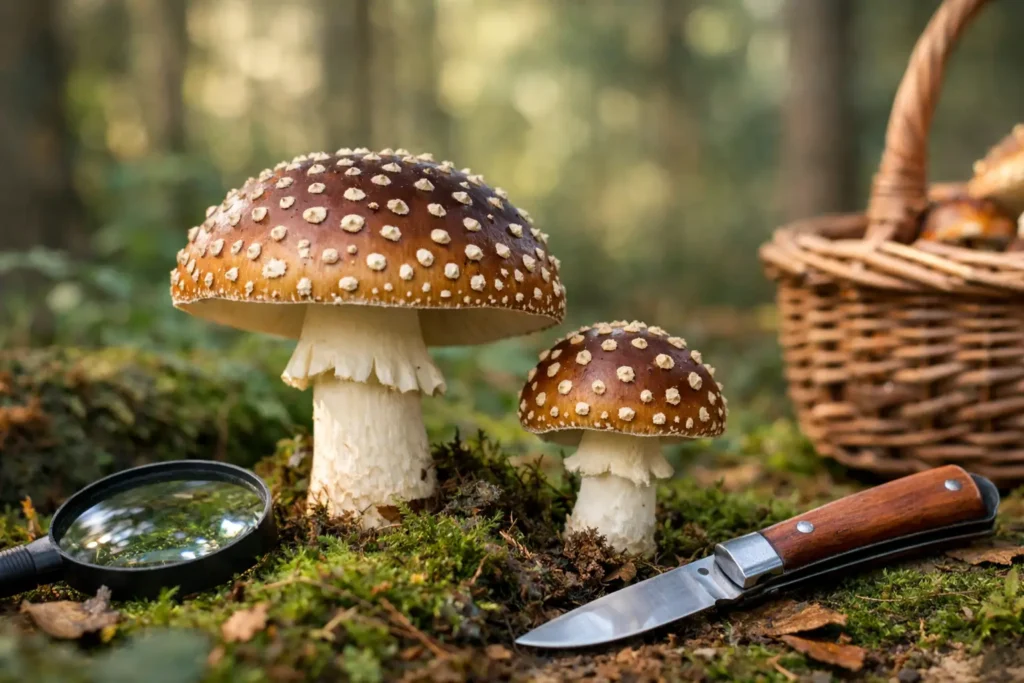
Amanita regalis is commonly known as the royal fly agaric. It is generally recognized by a darker brown to brown-olive cap with pale veil remnants, a stem, and the characteristic Amanita structure at the base. Natural color can vary with age, weather, handling, and drying, so cap color alone is never a reliable basis for identification.
For specialty mushroom buyers, the key point is botanical specificity. A product sold as Amanita regalis should be identified and labeled as that species, not presented with vague language such as “wild Amanita” or quietly substituted with a more common species. Clear species naming respects the customer and makes it possible to compare products honestly.
Regalis also occupies a different place in the market than familiar functional mushrooms. Lion’s Mane powders, capsules, and other formulated wellness products are generally selected for repeatable format, labeled serving information, and routine convenience. Dried A. regalis caps are raw wild botanical material. They retain natural variation in shape, color, thickness, and condition from one cap to the next.
That variation is not automatically a quality failure. It is part of buying a whole, wild-sourced mushroom. The standard should be accurate species handling and responsible quality control, not an artificial expectation that every cap will look identical.
How It Compares With Other Amanita Products
Amanita muscaria is the species most people recognize first, usually because of its red or orange-red cap and white spots. It is widely available, visually familiar, and often the entry point for collectors interested in Amanita material. Amanita regalis is less common and typically appeals to buyers specifically seeking the royal fly agaric rather than a generic fly agaric product.
Amanita pantherina is another species that may appear alongside regalis in specialty catalogs. It is frequently discussed as a distinct and more caution-sensitive species. For a buyer, the practical lesson is not to rank these mushrooms as stronger or better. It is to recognize that species matters. A product description should never imply that muscaria, pantherina, and regalis can be treated as equivalent simply because they share a genus or a visual category.
Regalis may be the better fit for a customer whose priority is collection-grade botanical specificity and appreciation for a less commonly stocked wild species. Muscaria may be more practical for someone looking for broader availability and recognizable visual characteristics. Neither choice removes the need for informed handling, safe storage, and careful attention to product labeling.
What Quality Looks Like in Dried Caps
A premium dried Amanita product does not need to look factory-perfect. It does need to show signs of thoughtful selection and storage. Whole or mostly intact caps are often preferred because they allow a buyer to inspect natural features more easily than heavily fragmented material. Some breakage in dried mushrooms is normal, especially during shipping, but a bag that is largely dust and unidentified fragments gives the buyer less confidence.
Dryness matters. Caps should be thoroughly dried and packaged to protect them from moisture exposure. Softness, unusual dampness, visible mold, or a stale and off-putting odor are reasons to stop and contact the seller rather than accept the product as normal. Properly handled dried material should be clean, dry, and free of obvious contamination.
Transparent presentation is equally important. A serious listing should state the botanical name, identify the material as dried caps or other specific mushroom parts, and avoid presenting raw Amanita as a conventional dietary supplement. Product photos should support the description, but they should not replace it. Wild mushrooms are naturally variable, so images are a reference point rather than a promise that every piece will match exactly.
For customers comparing retailers, a few operational details carry real weight: clear product segmentation, secure checkout, careful packaging, and prompt order processing. These details do not prove species identity on their own, but they indicate whether a seller understands the difference between a specialty botanical product and a novelty item.
The Limits of Any Product Review
No amanita regalis review can responsibly reduce this species to aesthetics, rarity, or customer enthusiasm. Amanita mushrooms contain bioactive compounds and may be toxic. They are not appropriate for everyone, and they should not be handled as food or treated as a replacement for medical care.
Species confusion is a serious concern with wild mushrooms. Amanita is a genus that includes dangerous species, and visual similarities can mislead inexperienced buyers. Purchase only from a seller that clearly identifies the product, keep the original packaging, and do not rely on social media photos or informal identification advice to determine what a mushroom is.
A responsible product page should also avoid exaggerated wellness language. The fact that a mushroom is natural, wild-foraged, or historically notable does not establish safety, quality, or suitability for an individual customer. Claims that promise a predictable experience are especially out of place with raw botanical material, where natural variation is inherent.
Legality and shipping rules can vary by location. Buyers in the United States and Canada should review the rules that apply where they live before ordering. A reliable retailer should be clear about its shipping policies and should not encourage customers to bypass local restrictions.
Who Should Consider Amanita Regalis?
Amanita regalis is best approached by informed adult buyers who understand the distinction between a specialty wild mushroom and a daily functional mushroom product. It may be of interest to ethnobotanical collectors, experienced mushroom hobbyists, and customers building a species-specific Amanita collection. Its value is primarily in authenticity, scarcity, and clear botanical classification.
It is not the right product for someone seeking a standardized, routine-friendly mushroom format. For that type of purchase, a clearly formulated functional mushroom powder or capsule is the more controlled option. Those products are designed around consistency and practical daily use, whereas dried regalis caps are defined by wild origin and natural variability.
This distinction is central to a confident purchase. A buyer should not expect raw caps to behave like a measured supplement, and a retailer should not market them that way. At Mario’s Mushrooms, separating wild Amanita material from functional mushroom formats helps customers evaluate each category according to the standards that actually apply.
A Practical Buying Standard
The strongest reason to choose Amanita regalis is not a dramatic promise. It is the opportunity to purchase a clearly identified, carefully presented wild species from a seller that understands specialty mushroom categories. Look for direct botanical naming, dry and well-protected caps, transparent product descriptions, and a retailer that treats safety information as part of product quality.
If any of those basics are missing, rarity is not enough to justify the purchase. The right Amanita regalis product should make its identity clear and leave no confusion about what it is: a distinctive wild botanical that deserves informed, careful consideration.