
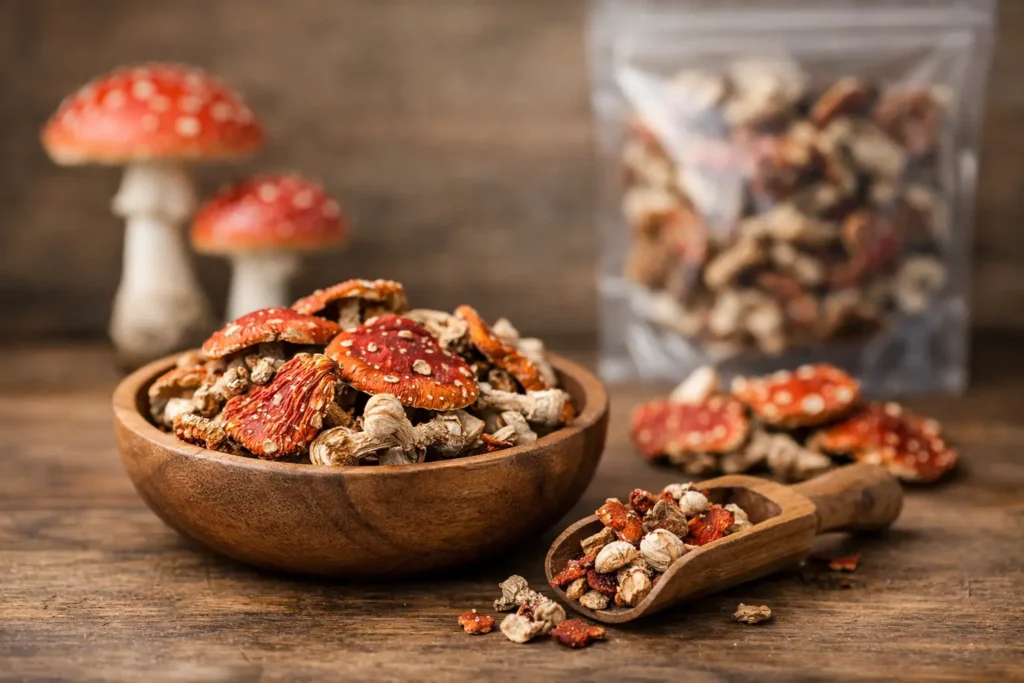
Not all red caps are equal, and experienced buyers usually know that within seconds of opening a bag. Premium dried fly agaric stands out through cap integrity, color retention, dryness, and how clearly the seller defines what the product actually is. If you are shopping for wild Amanita material, the difference between average stock and carefully handled caps is not cosmetic – it affects consistency, storage stability, and overall confidence in what you are buying.
For a category this specific, presentation matters because it reflects process. A seller that separates wild-sourced dried caps from functional powders and capsules is already doing something useful for the customer. It reduces confusion and makes it easier to evaluate the product on its own terms instead of blending it into generic mushroom marketing.
What makes premium dried fly agaric premium
The word premium gets overused, but in this category it should mean something concrete. First, the material should be recognizably fly agaric, typically Amanita muscaria, with visible cap structure rather than a bag full of anonymous fragments. Some breakage is normal with dried wild mushrooms, especially during transport, but heavy crumbling often points to rough handling or weak selection standards.
Color is another indicator, though it is not the only one. Well-preserved caps often retain a vivid red to orange-red surface, sometimes with the characteristic white veil remnants still visible. Natural variation is expected because wild mushrooms do not come off a factory line. A muted cap is not automatically low grade, especially if it was harvested later in the season or dried under conservative conditions, but a premium lot should still look clean, properly identified, and intentionally prepared.
Dryness is where quality becomes practical. Caps should be fully dried for storage stability, not leathery, damp, or inconsistently cured. Excess moisture shortens shelf life and raises questions about handling. Overdried material can also become excessively brittle, so there is a balance. Premium quality usually shows up as clean, dry caps that hold their form reasonably well without feeling soft.
Premium dried fly agaric vs. processed mushroom formats
This is where many shoppers benefit from clearer category language. Premium dried fly agaric is a raw, wild-sourced botanical product. It is not the same thing as a standardized mushroom extract, a measured capsule formula, or a repeat-use wellness powder intended for daily routine use.
That distinction matters because the buying criteria are different. With a functional mushroom powder, shoppers often prioritize extraction method, ingredient standardization, and serving consistency. With dried Amanita caps, buyers are usually looking for species specificity, whole-material authenticity, and visible quality cues tied to the original mushroom.
Neither format is inherently better. It depends on what the customer wants. If the goal is natural, unmodified mushroom material with the character of a wild-harvested product, dried caps make sense. If the goal is a more standardized wellness format, that is a different category entirely. A reliable retailer should make that separation obvious instead of forcing both products under the same vague umbrella.
How to assess dried caps before you buy
The best product pages reduce guesswork. They tell you the species, the form, and what you should expect when the package arrives. For premium dried fly agaric, that means clear labeling around whether you are purchasing whole caps, partial caps, or mixed cap material. Buyers who care about appearance and cap integrity should pay close attention here, because “dried Amanita” can mean very different things depending on how the lot was sorted.
Look for species clarity
Amanita muscaria, Amanita pantherina, and Amanita regalis are often discussed together, but they are not interchangeable products. A serious seller identifies the species directly and does not rely on broad, decorative language. If a listing is vague about which Amanita it contains, that is a quality problem before the package even ships.
Check the visual standard
Photos should show the actual style of material being sold, not just a polished hero image. You want to see cap shape, surface condition, and how much breakage is normal for that lot. Premium material does not have to look artificial or perfectly uniform, but it should look selected rather than swept together.
Pay attention to handling cues
Fast order processing, secure packaging, and clean product categorization are not minor ecommerce details. They are signs of operational control. In a niche mushroom category, the seller’s handling standards are part of the product quality equation.
Why sourcing and drying method matter
Wild mushrooms always carry natural variability. That is part of their appeal, but it also means sourcing discipline matters more than it would for a commodity supplement. Premium dried fly agaric should come from intentionally collected material that has been identified correctly and dried with storage stability in mind.
Drying method shapes the final product more than many buyers realize. If the mushroom is dried too slowly or stored before moisture is fully removed, quality drops fast. If it is processed too aggressively, visual character and structural integrity can suffer. The best lots usually reflect a controlled middle ground – dry enough for dependable storage, careful enough to preserve cap quality.
Seasonality also plays a role. Wild-foraged material changes with habitat, climate, and harvest window. That means even premium stock can vary somewhat from batch to batch in shade, spotting, and cap size. Good retailers set that expectation clearly instead of pretending all wild mushrooms should look identical.
Storage and freshness expectations
Once dried caps arrive, storage becomes your responsibility. Premium material can lose quality if it is left exposed to humidity, heat, or frequent air exchange. A cool, dry, dark environment is the baseline. Resealable packaging helps, but buyers who order larger amounts often prefer an additional airtight container for long-term storage.
Freshness in dried mushroom products is not the same as freshness in produce. You are not looking for softness or moisture. You are looking for clean dryness, stable appearance, and no signs of contamination or poor handling. A premium product should arrive ready for storage, not needing correction from the customer.
The trade-off between whole caps and lower-cost material
For many buyers, whole or mostly intact caps are worth paying more for. They are easier to inspect visually, they signal more careful handling, and they align with the expectation of a premium wild product. That said, lower-cost broken cap material can still be valid if the seller presents it honestly and prices it accordingly.
This is one of those areas where it depends on your priorities. If your focus is presentation, collectability, or confidence through visual inspection, intact caps are usually the better choice. If your focus is simply obtaining correctly identified dried material at a lower entry price, partial caps may still be a rational option. What matters is transparency. Premium should describe actual grading, not just marketing tone.
Choosing a seller with real category control
A niche product deserves a seller that treats it like a niche product. That means precise naming, strong species separation, and a storefront that does not blur raw ethnobotanical material with standardized mushroom supplements. Mario’s Mushrooms fits that model by keeping wild Amanita products distinct from functional mushroom formats, which makes the buying path clearer for customers who know the difference and for customers who are still learning it.
Operational trust also matters. Secure checkout, prompt fulfillment, and consistent product presentation help reduce the friction that often comes with specialty categories. When the product itself is unusual, the retail experience should not be.
Who premium dried fly agaric is really for
This is not a generic mushroom purchase. Premium dried fly agaric is for buyers who care about species-specific material, visible quality, and the difference between raw wild caps and processed wellness products. That usually includes ethnobotanical shoppers, specialty mushroom collectors, and experienced customers who read listings closely instead of shopping by buzzword.
It may not be the right fit for someone looking for a standardized daily-use supplement. In that case, a functional mushroom powder or capsule often makes more sense. But for customers who want authentic dried Amanita material, premium quality shows up in all the details – clean caps, clear species labeling, stable drying, and a retailer organized enough to present the product honestly.
When a seller gets those fundamentals right, buying becomes much simpler: you are not paying for hype, you are paying for clear identification, careful handling, and a product that looks exactly like it belongs in a serious mushroom catalog.