
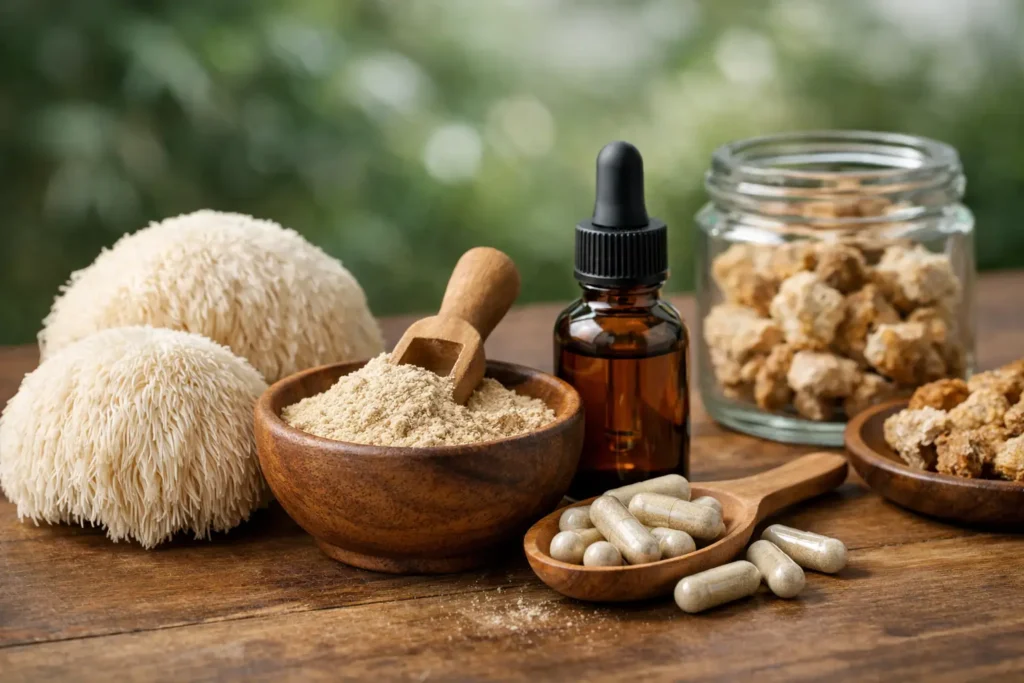
A Lion’s Mane label can look premium while revealing very little about what is actually in the jar. The top signs of quality lion’s mane are specific, verifiable details: the correct species name, a clearly identified mushroom material, meaningful testing, and a format that matches how you plan to use it. For buyers who already understand the difference between wild mushroom material and standardized functional products, those details are where quality becomes visible.
Lion’s Mane is usually sold as powder, capsules, tinctures, or extract blends. None of these formats is automatically superior. A straightforward fruiting body powder can suit someone who wants the whole mushroom in a minimally processed form. A standardized extract can be a better fit for a repeatable daily routine. The key is whether the seller clearly explains which one you are buying.
Top Signs of Quality Lion’s Mane at a Glance
Start with botanical identity. Quality Lion’s Mane products should identify the mushroom as Hericium erinaceus. “Mushroom complex,” “brain blend,” or a front-label illustration of a white mushroom is not the same as a precise species declaration. Lion’s Mane has recognizable natural forms, but once it is milled into powder or packed into capsules, accurate labeling becomes the main way to confirm its identity.
Next, look for a direct statement about the material used. Is it fruiting body powder, mycelium, a fruiting body extract, or a combination? This distinction matters because these materials are produced differently and have different compositions. A transparent product does not hide behind broad language such as “mushroom biomass” when a more exact description is available.
Quality also shows up in what a brand is willing to disclose. Batch information, a supplement facts panel, country of origin where relevant, testing standards, and storage guidance all indicate a more controlled product process. Marketing language can be useful, but it should not replace the basics.
Fruiting Body, Mycelium, and Grain: Read Beyond the Front Label
The fruiting body is the familiar above-ground mushroom, often dried and milled into powder or used as the starting material for extraction. Many experienced buyers prefer products that state “100% fruiting body” because the ingredient is easy to understand and aligns with the whole-mushroom format they expect.
Mycelium is the thread-like fungal network used to grow the organism. It is a legitimate mushroom material, but the quality question is more complicated when mycelium is cultivated on grain. If the final material includes substantial residual rice, oats, or another substrate, the finished powder may contain more starch than a buyer assumes. That does not make every mycelium product poor quality. It does mean the label should be clear about whether the product is pure mycelium, mycelium biomass, or myceliated grain.
A quality-focused seller makes the distinction easy to find. If a product is a fruiting body extract, it should say so. If it uses mycelium, that should also be stated directly. Clear categorization lets you choose natural, minimally processed mushroom material or a more standardized functional format without guessing.
Whole Powder and Extracts Serve Different Purposes
Whole Lion’s Mane powder retains the broader composition of the dried mushroom. It is typically the simpler choice for customers who prefer a recognizable food-style ingredient with minimal processing. Its trade-off is natural variation from harvest to harvest, along with a less concentrated format.
Extracts use water, alcohol, or a dual-extraction process to concentrate selected mushroom compounds. A properly described extract may list an extract ratio, such as 8:1, or provide a measured marker compound. However, an extract ratio alone is not proof of potency. Ratios can be presented without enough context about the starting material, extraction method, or finished batch.
For regular use, capsules can offer the most consistent serving size. Powders offer more flexibility for mixing into coffee, tea, smoothies, or food. The best format is the one with a transparent formula and a serving size you can realistically maintain.
Ask for Testing That Means Something
Independent batch testing is one of the strongest quality signals for functional mushroom products. At minimum, a serious quality program should address identity, microbial contamination, heavy metals, and, when appropriate, pesticide residues. The exact testing panel depends on sourcing, cultivation method, and market requirements, but vague claims such as “lab tested” are weaker than actual details about what was tested.
A certificate of analysis, often called a COA, is most useful when it corresponds to a batch or lot number. It should show the product or raw material tested, the date, the laboratory or method where available, and actual results or pass/fail limits. A generic document with no connection to the package in your hand offers much less assurance.
Beta-glucan disclosure can also be helpful, especially for extracts. Beta-glucans are naturally occurring mushroom polysaccharides, and a stated percentage can provide a clearer point of comparison between products. Still, buyers should be careful with labels that only advertise “polysaccharides.” That broad category can include starches and other carbohydrates, particularly in grain-based materials. A beta-glucan figure is generally more informative than a polysaccharide figure alone.
Testing should support accurate quality control, not become a shortcut for exaggerated wellness promises. Lion’s Mane is a functional mushroom product, not a substitute for medical care, prescribed treatment, sleep, nutrition, or professional advice. A controlled, factual label is usually more trustworthy than one that promises dramatic results.
Inspect the Formula, Not Just the Serving Claim
A clean formula makes comparison easier. Ideally, the label gives the amount of Lion’s Mane per serving and identifies any other active ingredients individually. A blend can be useful when it is intentionally formulated, but a proprietary blend that lists a large total weight without showing how much Lion’s Mane it contains leaves the buyer without a real basis for comparison.
Capsule excipients are not automatically a problem. Plant cellulose capsules, rice flour, or flow agents may be used for manufacturing consistency. The question is proportion and disclosure. If a product needs numerous fillers, artificial colors, or heavily flavored additions to appear appealing, check whether the Lion’s Mane content is still meaningful.
Pay attention to serving size as well. A large number printed on the front of a container may refer to the total bottle weight, not the amount per daily serving. Compare the milligrams or grams per serving, the number of servings in the container, and the form of the ingredient before deciding which product offers better value.
Freshness, Packaging, and Sensory Cues Still Matter
Lion’s Mane powder should be dry, free-flowing, and stored in packaging designed to limit moisture and light exposure. Clumping can happen in humid conditions, but excessive hardening, a stale odor, or visible moisture are reasons to pause. Whole dried Lion’s Mane should be clean, dry, and appropriately packed, without signs of dampness or careless handling.
Color varies by processing method. A pale cream powder may be typical of a simple fruiting body powder, while an extract can be darker due to concentration and processing. Darker is not automatically stronger, and lighter is not automatically purer. Use appearance as a supporting clue, not the deciding factor.
Packaging should also make traceability practical. Look for a lot number and a best-by date. Functional mushroom powders are not meant to sit indefinitely in a warm cabinet after opening. Close the container securely, keep it dry, and follow any storage instructions on the label.
Choose Transparency Over Hype
The strongest Lion’s Mane products do not force customers to infer the basics. They identify Hericium erinaceus, explain whether the product is fruiting body powder, mycelium, or extract, disclose the serving amount, and support quality claims with relevant testing. That level of control is particularly valuable when buying online, where you cannot inspect the material before it arrives.
Price deserves context, too. A low-cost powder may be appropriate if it is plainly labeled as myceliated grain or a basic culinary powder. A higher-priced extract may be justified when it offers verified composition, controlled manufacturing, and lot-specific testing. Neither price point proves quality by itself. What matters is whether the product description gives enough information to understand the difference.
A reliable purchase starts with a simple standard: buy the Lion’s Mane format you actually want, then expect the label and testing to prove that it is exactly what it claims to be.