
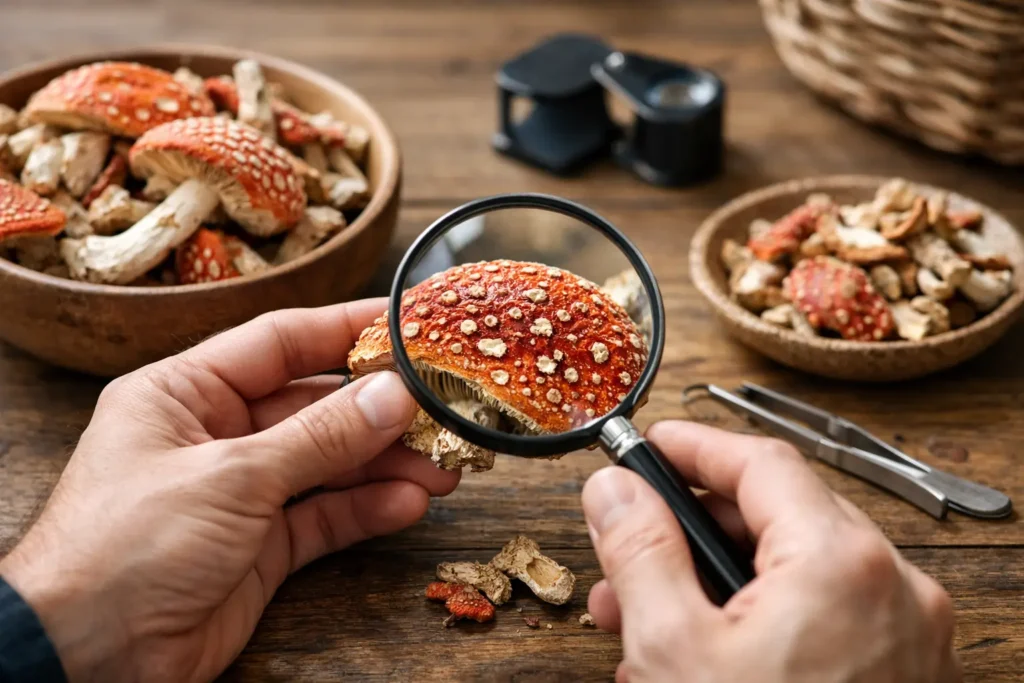
A dried cap can look dramatically different from the fresh mushroom it once was. Color softens, edges curl, and natural variation becomes more obvious after dehydration. Knowing how to inspect dried amanita helps you separate normal wild-harvest character from signs of poor handling, contamination, or unclear product identity.
This is a quality-control check, not a substitute for expert species identification or a determination that a mushroom is suitable for use. Dried Amanita material should be accurately labeled, stored properly, and evaluated conservatively. If anything about an order feels unclear, do not guess – document the issue and contact the seller.
Start With the Label and Product Information
Inspect the package before opening it. A quality specialty mushroom product should clearly identify the botanical material being sold. The label should distinguish species such as Amanita muscaria, Amanita pantherina, or Amanita regalis rather than relying only on a broad name like “fly agaric.” Those species are related, but they are not interchangeable product descriptions.
Look for a clear statement that the contents are dried caps or dried mushroom material, along with the net weight and seller information. A lot number, harvest reference, packing date, or other traceability detail is also a positive quality signal when available. These details do not remove every uncertainty associated with wild botanicals, but they show that the product has been categorized and handled deliberately.
Be cautious with packaging that has no species name, no weight, vague photos, or claims that are much broader than the product itself. Raw wild mushrooms naturally vary in appearance. Clear labeling is what gives that variation useful context.
How to Inspect Dried Amanita After Opening
Open the package in good light over a clean, dry surface. Avoid inspecting it near steam, an open window, food preparation areas, or anything that could introduce moisture. If you are comparing the contents with product photos, remember that photos are a reference point, not a guarantee of identical color or cap shape.
Check dryness and physical condition
Properly dried Amanita caps should feel dry throughout. Depending on cap thickness and the drying method, pieces may be crisp, firm, leathery, or somewhat brittle. A little breakage is common during shipping, particularly with larger caps and thinner cap edges. Whole caps are visually appealing, but an intact cap is not automatically higher quality than a clean, properly dried broken piece.
What should raise concern is softness that feels damp rather than naturally flexible, tackiness, visible wet spots, or material that seems to have reabsorbed moisture. Dried mushrooms can degrade quickly once moisture enters the package. Condensation inside a sealed bag is another reason to pause and contact the seller.
Do not rely on squeezing a cap repeatedly to judge it. Excess handling can turn fragile material into unnecessary fragments. A light touch is enough to assess whether the material is dry and stable.
Look at color without overreading it
Amanita caps are often recognized by their striking surface colors, but dehydration changes the visual profile. Reds and oranges in A. muscaria may become muted, yellow-orange, russet, or brownish in areas. Pale patches, uneven pigmentation, curled margins, and exposed underside tissue can all occur in dried wild material.
The white universal-veil remnants often associated with Amanita caps may remain visible as flakes, warts, or irregular patches. They may also be partly lost through harvesting, drying, and transport. Their presence or absence alone does not confirm species, quality, or safety.
Focus less on finding a perfectly uniform “textbook” cap and more on whether the material matches the seller’s stated species and product category. A premium wild mushroom product can still show natural color range, cap-size differences, small tears, and minor cosmetic variation.
Check for mold, pests, and foreign matter
This is the most practical part of the inspection. Examine cap surfaces, folds, gills, and the bottom of the package for anything that appears inconsistent with dry botanical material. Mold can appear fuzzy, powdery, web-like, or unusually discolored. A musty odor, damp clumping, or growth that was not visible at first glance also warrants concern.
Small amounts of naturally occurring forest debris can occasionally appear in wild-harvest material, especially around gills or cap folds. That is different from obvious contamination. Insects, webbing, larvae, unexplained pellets, excessive grit, or unidentified plant matter are not details to dismiss.
Use a simple standard: if you cannot confidently describe what you are seeing as normal dried mushroom material, set the product aside. Take clear photos before moving or discarding anything. Documentation gives the seller a fair chance to review the issue and helps preserve the condition in which the order arrived.
Use Smell as a Secondary Quality Check
Aroma can provide useful information, but it should never be the only test. Dried mushrooms commonly have an earthy, woody, hay-like, or mildly mushroom-forward smell. Some batches have very little scent at all. Storage conditions, cap thickness, and age can influence aroma.
Avoid treating a strong or unusual smell as a minor cosmetic issue. Sour, rancid, sharply chemical, perfume-like, or distinctly musty odors can indicate poor storage, contamination, or contact with another material. Do not taste a dried cap to investigate an odor or identify a species.
If the product has been stored near spices, incense, cleaning products, or strongly scented foods after delivery, outside odors can transfer to the package. That is one reason sealed, odor-neutral storage matters.
Compare What You Received With What Was Sold
A reliable inspection is partly about matching the physical item to the listing. Confirm the species, format, approximate quantity, and cap presentation. If the product was described as whole caps, some fragments may still be expected, especially after transit. If it was sold as a mixed cap grade, variation in size and appearance is normal.
However, the basic product should not be materially different from the description. A package labeled as one Amanita species should not arrive with unexplained mixed-looking material. A product advertised as clean dried caps should not contain a large amount of powder, stems, or unrelated plant matter without disclosure.
This distinction matters because Amanita products are raw, wild-sourced botanical materials, not standardized functional mushroom powders. Wild material carries natural differences from one cap to another. That does not eliminate the need for accurate categorization. It makes transparent categorization more valuable.
Know What Inspection Cannot Tell You
Visual review has limits. You cannot verify chemical composition, potency, handling history, or species identity with certainty just by looking at dried caps. A cap’s color, spots, gills, or shape may offer context, but dehydration and handling remove many features used in formal field identification.
Do not use online image comparisons as a final identification method. Do not assume that an attractive cap is clean, that a broken cap is poor quality, or that a familiar-looking cap is suitable for any intended purpose. Amanita species have meaningful differences, and wild fungi do not offer the same uniformity as standardized supplements.
For consumers looking for predictable everyday wellness formats, clearly labeled functional mushroom powders or capsules are a separate category from wild Amanita caps. The choice depends on whether you value raw botanical character or a product designed around repeatable, standardized use.
Store Dried Caps Properly After Inspection
Once the package passes your initial inspection, keep the material dry, sealed, and protected from light and heat. A cool cabinet away from the stove, sink, bathroom, and direct sunlight is usually more appropriate than an area with changing humidity. Keep it away from children, pets, and food items.
Do not transfer dried caps into a container that has retained moisture or food odor. If you use a different storage container, choose one that is clean, fully dry, and clearly labeled with the species and original purchase details. Retaining the original packaging information or taking a photo of it helps maintain traceability later.
Recheck stored material periodically. A product that was dry and clean on arrival can still be affected by humidity after opening. If texture, odor, or appearance changes, treat that as a fresh quality-control issue rather than assuming it is harmless aging.
When to Contact the Seller
Contact the seller promptly if you find moisture, suspected mold, pest activity, unidentified foreign material, a major labeling discrepancy, a damaged seal, or a condition that differs substantially from the listing. Include the order number, product label, photos of the package, and photos of the concern in natural light. Keep the product and packaging available until you receive instructions.
A careful inspection does not require turning every small color shift or broken edge into a problem. It means recognizing that premium dried Amanita should arrive as clearly identified, dry, clean botanical material that has been packaged with care. When the facts are unclear, a controlled response is better than an assumption.