
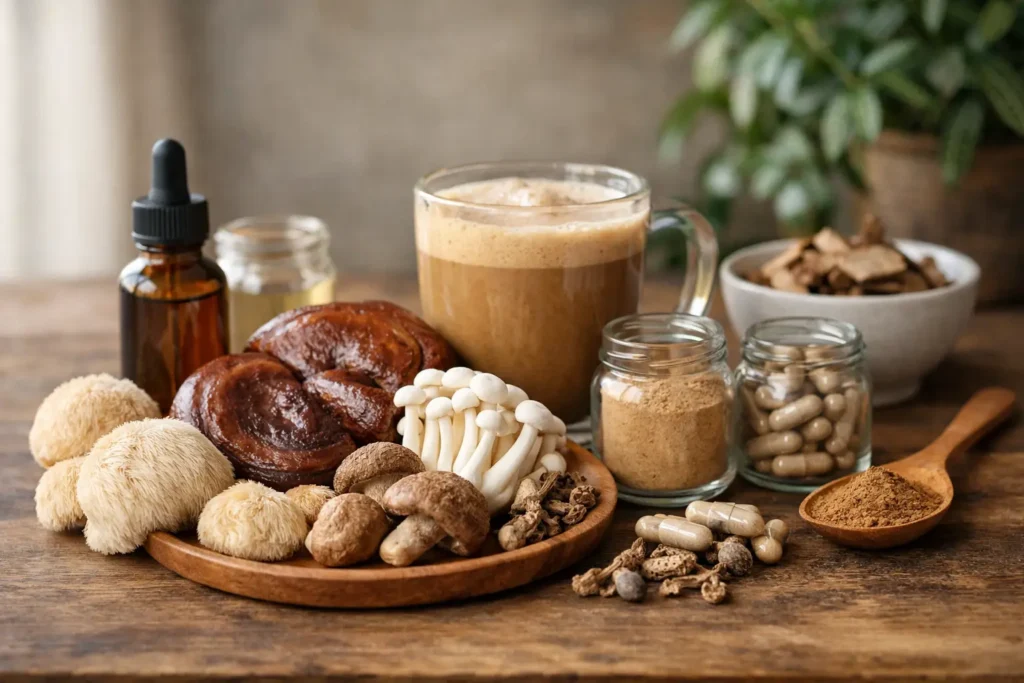
A mushroom product can look premium on a shelf and still leave major questions unanswered: Is it fruiting body or mycelium? Is it a raw wild botanical or a standardized supplement? Is the species identified clearly? In 2026, buyers are asking those questions earlier, and that shift is defining the most meaningful mushroom wellness trends 2026.
The category is moving past broad claims and generic blends. More informed customers want mushroom products that fit a specific purpose, a repeatable routine, or a clear interest in ethnobotanical material. That requires better labeling, more honest product segmentation, and an understanding that not all mushroom formats should be evaluated by the same standard.
Mushroom Wellness Trends 2026: Clarity Over Hype
The strongest trend is not a new mushroom species. It is category clarity. Buyers increasingly understand that a dried wild mushroom cap, a powdered fruiting body, an extract, and a mycelium-based product are distinct materials with different characteristics.
For functional wellness shoppers, consistency is often the priority. Powders and capsules offer measured, convenient formats that can be incorporated into a regular routine without requiring preparation or guesswork. Lion’s Mane remains a major category leader because it is familiar, versatile, and available in formats that suit daily use. The focus is shifting from dramatic promises toward practical questions: What part of the mushroom is used? What is the serving format? How easily can this product fit into a routine?
For specialty mushroom buyers, authenticity may carry more weight than uniformity. Wild-sourced Amanita muscaria, Amanita pantherina, and Amanita regalis are botanically distinct materials, not interchangeable versions of a single product. Cap size, color, origin, drying, and natural variation can all matter to collectors and experienced ethnobotanical customers.
A reliable retailer does not blur those categories. Functional supplements and raw wild botanical products should be organized separately, described accurately, and purchased with different expectations.
Standardized Formats Are Becoming the Default for Daily Use
Wellness customers are increasingly choosing formats that reduce friction. Capsules appeal to people who want portability and consistent servings. Powders suit customers who prefer flexible use in beverages or food. Both formats are becoming more refined, with less tolerance for vague labels or proprietary blends that obscure the amount of each ingredient.
This does not mean every buyer needs the most processed format available. It depends on the goal. A customer building a repeat-purchase wellness routine may prefer capsules for speed and consistency. Someone who enjoys adjusting a recipe or beverage may choose powder. The key is that the product format should support the intended use instead of creating unnecessary complexity.
The better functional mushroom brands will continue to make the format easy to understand. They will identify the species, distinguish fruiting body material from mycelium when relevant, and avoid treating every mushroom ingredient as if it performs the same role.
The End of the “Everything Blend” Mindset
Multi-mushroom blends are not disappearing, but buyers are becoming more selective about them. A blend can be useful when it is transparent and designed for a simple purpose. It becomes less useful when the label gives no meaningful detail about the individual mushrooms, material used, or quantity per serving.
Single-species products are gaining attention because they allow customers to make cleaner comparisons. If Lion’s Mane is the focus, a clearly labeled Lion’s Mane product is easier to assess than a broad blend with a long ingredient panel. Blends still have a place, particularly for shoppers who value convenience, but clarity now matters more than ingredient count.
Sourcing and Material Type Are Purchase Decisions
As mushroom wellness matures, sourcing is becoming part of the product itself. Customers want to know whether they are purchasing cultivated functional material, wild-foraged botanical material, whole caps, powder, or an extract-based formula. These details are not minor technicalities. They set expectations for appearance, consistency, storage, and use.
Wild mushrooms naturally vary. A dried cap is not manufactured to look identical from piece to piece, and that variation is often part of its appeal. Buyers interested in Amanita products may value species-specific sourcing and whole mushroom form precisely because the product has not been reduced to a generic supplement identity.
Standardized functional products serve a different need. Their value is operational consistency: a stable format, familiar serving method, and easier repeat ordering. Neither category is inherently better. The right choice depends on whether a customer values raw botanical character or a controlled, routine-friendly format.
This distinction also improves safety and communication. Amanita species should never be marketed as casual wellness supplements or confused with culinary mushrooms. They require careful species identification, responsible handling, and awareness of applicable local rules. A clear store category helps customers recognize when they are looking at a specialty wild botanical rather than a conventional functional mushroom product.
Better Labels Will Separate Serious Products From Generic Ones
In 2026, mushroom shoppers will increasingly use labels as a quality filter. A strong product page or package should make several basics easy to find: the mushroom species, the form of the material, the net amount, the serving information for supplements, and the ingredient list.
For functional powders and capsules, customers should look beyond front-label language. Terms such as “mushroom complex” or “full spectrum” can sound impressive without explaining much. A more useful label tells the customer what is actually in the container and how the product is intended to be used.
For dried specialty mushrooms, precision means proper botanical naming, straightforward format descriptions, and realistic acknowledgment of natural variation. Products should not rely on vague imagery or sensational language to create value. Clear identification is more useful than a dramatic story.
Packaging will also matter more. Mushroom powders are sensitive to moisture and should be stored in a cool, dry place with the container properly sealed. Dried caps need the same practical attention. Good packaging and storage guidance protect product condition from checkout to repeat use.
Convenience Is Rising, but So Is Buyer Scrutiny
Fast processing, secure checkout, and sensible shipping policies are now part of the wellness purchase decision. Customers who use functional mushroom products regularly do not want a complicated buying experience. They want to compare formats, choose an appropriate size, and reorder with confidence.
At the same time, convenience alone is not enough. The modern mushroom customer is more likely to question a product that seems too generalized, too cheap to be credible, or unclear about its species and material. Price matters, but it is being weighed alongside product specificity, preparation quality, and retailer reliability.
This is especially relevant for Canadian and U.S. buyers navigating a market where product availability, labeling practices, and regulations can vary. Before ordering, customers should confirm that the item is permitted where they live and review any retailer-provided product information carefully. Responsible purchasing is part of quality control.
A More Disciplined Wellness Category
The next phase of mushroom wellness is less about chasing novelty and more about choosing products with a defined identity. Functional mushroom users are building simpler, more consistent routines. Specialty buyers are seeking botanical specificity and authentic whole-material formats. Both groups benefit when retailers make distinctions clear instead of placing every mushroom product under one broad wellness label.
That is why the most durable trend is informed selection. Choose a format that matches the intended role, check the species and material type, and favor straightforward product information over oversized claims. A well-defined mushroom product gives the customer something more valuable than hype: a clear basis for deciding whether it belongs in their routine or collection.