
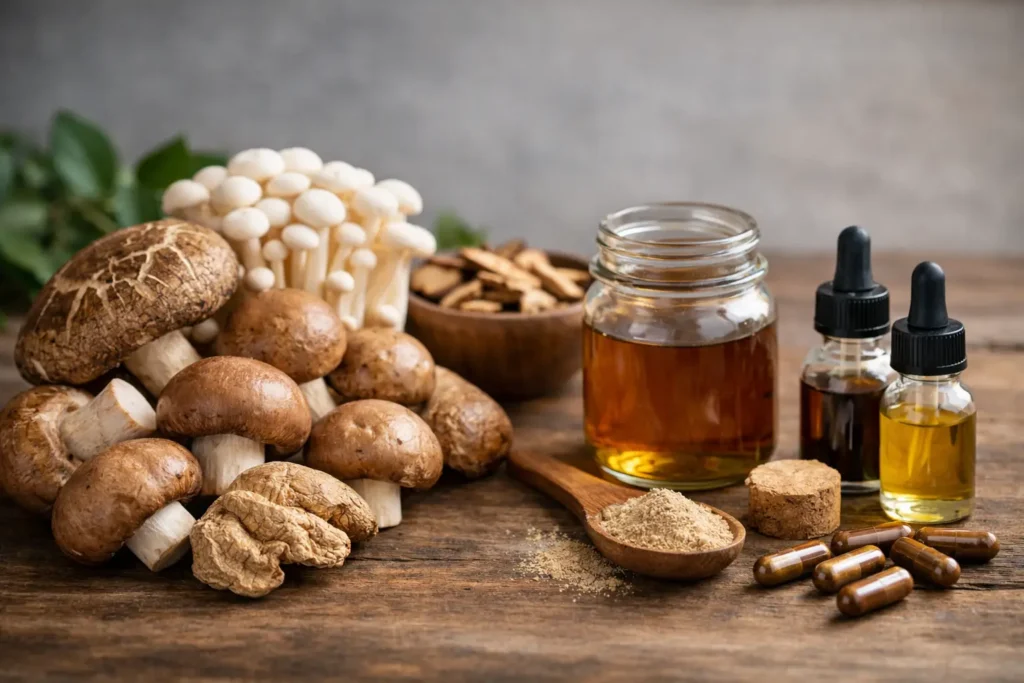
A mushroom label can look straightforward until you compare two products side by side: one offers dried whole caps or a full-spectrum powder, while the other offers an extract in capsules or powder. The question of whole mushroom versus extract is not about which format is universally superior. It is about what material you want, how much consistency you expect, and whether the product belongs in a repeatable routine or a more botanical, specimen-focused purchase.
For specialty mushroom buyers, format is part of the product identity. A whole mushroom preserves the recognizable characteristics of the original fruiting body. An extract is processed to concentrate or standardize selected compounds. Both can be high-quality products, but they answer different buying priorities.
Whole Mushroom Versus Extract: The Core Difference
Whole mushroom products use the mushroom in a minimally altered form. This may mean intact dried caps, sliced fruiting bodies, or powder made by milling the complete mushroom material. The appeal is directness: buyers can see or understand the botanical material they are purchasing without relying on a heavily processed format.
Extracts begin with mushroom material that is processed, commonly with water, alcohol, or a combination of extraction methods. The resulting material is then dried and sold as a powder, capsule, tablet, or liquid. The goal is generally to make particular mushroom constituents more available, more concentrated, or more consistent from batch to batch.
That distinction matters because “mushroom” alone does not tell you enough. A product can contain fruiting body powder, mycelium, a dual extract, an extract blended with powder, or a wild-foraged dried cap. These are not interchangeable descriptions, even when they come from the same species.
Why Whole Mushroom Material Appeals to Specialty Buyers
Whole mushroom material has a clear advantage for buyers who value authenticity, botanical specificity, and a closer connection to the original organism. With dried caps and other intact material, the physical form itself provides context. You can assess the cap structure, color, and overall presentation as part of the product experience.
This is especially relevant in wild-sourced categories. Naturally grown mushrooms vary by season, habitat, maturity, and drying conditions. That variation is not necessarily a flaw. For many experienced ethnobotanical buyers, it is part of what makes a wild mushroom product distinct from a standardized supplement.
Whole material is also easier to categorize honestly. A dried Amanita cap is a dried Amanita cap. It should be presented as raw botanical material, not framed as a standardized wellness supplement or assigned a level of consistency that the format cannot guarantee.
The trade-off is natural variability. Two whole caps of the same species may differ in size, appearance, density, and chemical profile. Buyers seeking exact uniformity from one purchase to the next may find that a processed, tested format better matches their expectations.
Whole Does Not Always Mean More Complete
“Whole” can sound inherently better, but it should not be treated as a shortcut for quality. The quality of whole mushroom material depends on correct species identification, sourcing, handling, drying, storage, and transparent labeling. A poorly stored whole mushroom is not made premium simply because it remains intact.
It also helps to distinguish whole fruiting body material from mycelium-based products. Fruiting bodies are the visible mushrooms most people recognize. Mycelium is the threadlike fungal network that grows through a substrate. Both can be legitimate mushroom ingredients, but they are different materials and should be identified clearly on the label.
What an Extract Changes
An extract changes the product from a raw botanical specimen into a controlled ingredient format. This can be useful when a buyer wants a product that is easy to measure, easy to store, and simple to use consistently. Capsules and finely milled extract powders fit naturally into regular supplement routines because the serving format is standardized by the manufacturer.
Extraction may also make certain mushroom compounds easier to access than they would be in untreated material. That does not mean every extract is automatically stronger or better. The result depends on the species, the starting material, the extraction method, the ratio of raw material to finished extract, and whether the product has meaningful testing behind its claims.
A quality extract should make its format understandable. Look for a clear species name, the plant or fungal part used, the extraction type when available, and any disclosed standardization targets. Vague descriptions such as “mushroom blend” leave too much unanswered for buyers who care about material quality.
Extract Ratios Need Context
A label may describe an extract as 8:1, 10:1, or another ratio. These figures can be useful, but they are not a stand-alone measure of value. An extract ratio generally describes how much starting material was used relative to the finished extract, but it does not reveal everything about the final product.
For example, a high ratio does not automatically confirm high levels of a particular constituent. It also does not tell you whether the source was fruiting body, mycelium, or a blend. Standardization data, batch testing, and transparent sourcing provide stronger purchasing context than a large ratio printed on the front of a package.
Choosing by Product Category
The most useful question is not “Which form wins?” It is “What category am I buying from?” Wild specialty mushrooms and functional wellness mushrooms should be assessed differently.
For wild-sourced Amanita material, whole dried caps and clearly identified raw mushroom products are often the most transparent format. Their value is tied to species identity, natural form, visual quality, and careful handling. These products should be sold with clear category boundaries, accurate botanical naming, and no confusion with conventional dietary supplements.
For functional mushrooms such as Lion’s Mane, extracts, powders, and capsules can make more sense for buyers building a consistent routine. A capsule provides a controlled format, while an extract powder offers flexibility for those who prefer to incorporate it into an existing daily regimen. The key is knowing whether the product is a whole fruiting body powder, an extract, or a combination.
At Mario’s Mushrooms, this separation is central to a clear shopping experience: raw, wild-sourced botanical mushrooms belong in a different category from processed functional mushroom formats designed for regular use. That distinction helps customers compare like with like rather than assuming every mushroom product serves the same purpose.
Quality Signals Worth Checking
Whether you choose whole material or an extract, product quality should be visible in the details. Reliable sellers identify the species precisely rather than relying only on a common name. They describe the format accurately, state whether material is wild-sourced or cultivated when applicable, and avoid blending raw botanical categories with wellness claims that do not fit the product.
For extracts, consistency is a major value signal. Look for transparent ingredient panels, stated serving sizes, and batch-level quality controls where available. For whole mushrooms, inspect product photography and descriptions for signs of careful drying, clean packaging, and realistic acknowledgment of natural variation.
Testing has a different role depending on the product. In a functional supplement, it may support ingredient identity, purity, and consistency. In a specialty wild mushroom category, testing and quality controls can support responsible sourcing and product handling, but they do not turn a naturally variable botanical into a standardized extract.
Storage also deserves attention. Dried mushrooms and mushroom powders should be protected from moisture, excessive heat, and prolonged exposure to air. A well-made product can lose quality quickly if it is stored carelessly after purchase.
When Whole Mushroom Is the Better Fit
Choose whole mushroom material when the natural form is part of what you value. This format fits collectors, mushroom enthusiasts, and specialty buyers who want clearly identified fruiting bodies or minimally processed botanical material. It also suits shoppers who prefer to evaluate visual characteristics and accept that wild-grown products vary from one batch to another.
Whole material is generally the more honest choice when purchasing unusual wild mushroom species. It keeps the category clear: this is botanical material with natural variability, not a standardized capsule designed to deliver the same profile in every serving.
When an Extract Is the Better Fit
Choose an extract when convenience and consistency matter more than preserving the mushroom’s original physical form. Capsules are practical for repeat purchasing and organized routines, while extract powders can be useful for buyers who prefer a flexible format.
Extracts are also a stronger fit when the seller provides meaningful information about source material and standardization. A well-labeled extract gives you a more controlled purchasing decision than a generic powder with no indication of what part of the fungus it contains or how it was processed.
The best format is the one whose label tells the same story as your buying goal. If you want an authentic wild mushroom specimen, choose transparent whole material. If you want a stable functional format built for consistency, choose a clearly identified extract. Start with the category, read beyond the front label, and let the product’s actual material determine the decision.