
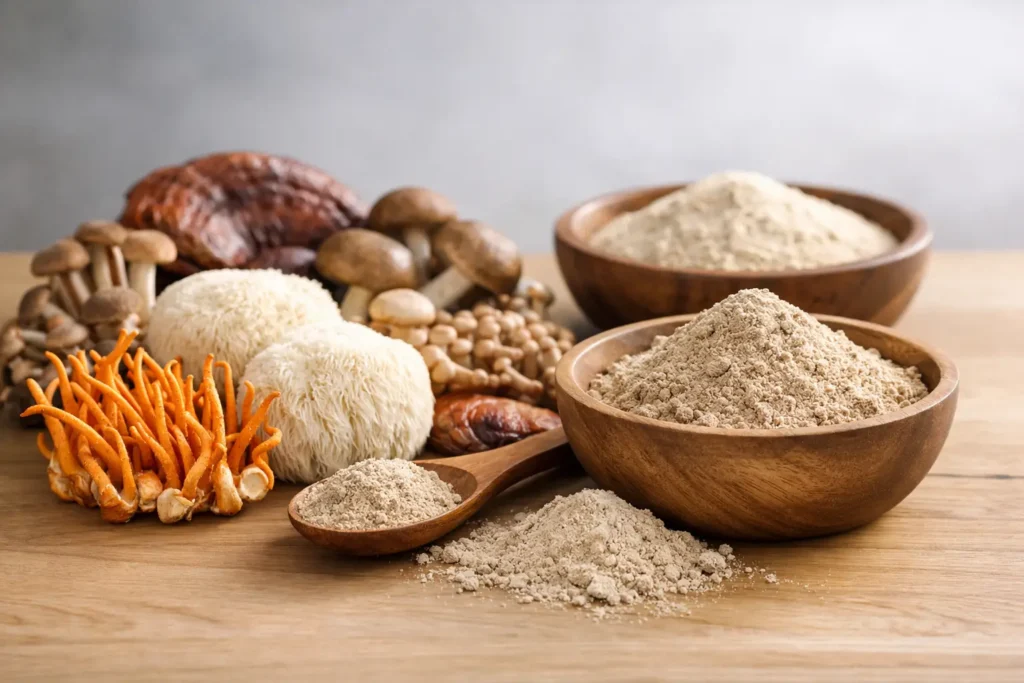
If you have ever compared two mushroom supplements that both claim to support focus, immunity, or daily wellness, you have probably run into the fruit body vs mycelium powder question fast. One label highlights the mushroom itself. Another emphasizes cultivated mycelium. Both can be sold as powders, capsules, or blends, but they are not the same raw material, and that difference matters when you are evaluating quality, consistency, and what you are actually paying for.
For experienced mushroom buyers, this is less about hype and more about product logic. The part of the fungus used, how it was grown, and how it was processed all affect the final powder. If you understand those variables, labels become much easier to read and buying decisions become much cleaner.
What fruit body and mycelium actually are
The fruit body is the visible mushroom structure people recognize – the cap, stem, and reproductive structure harvested above the growing surface. In functional products, fruit body powder is made by drying and milling that harvested mushroom, and in some cases extracting it to concentrate specific compounds.
Mycelium is different. It is the root-like network of fungal threads that grows through a substrate. In nature, mycelium lives inside wood, soil, or other organic matter. In commercial production, it is often cultivated on grain or another nutrient medium until it reaches a usable biomass, then dried and milled into powder.
That distinction sounds simple, but it creates one of the biggest points of confusion in the supplement category. When a product says mycelium powder, the material may include not only fungal biomass but also some amount of the substrate it was grown on. Depending on the production method, that can change the concentration of mushroom-specific compounds in the finished product.
Fruit body vs mycelium powder: the real difference
The most practical difference in fruit body vs mycelium powder is not that one is automatically good and the other is automatically bad. It is that they are different inputs with different profiles.
Fruit body powders are usually chosen by buyers who want the actual mushroom structure listed on the label. This format often appeals to customers looking for recognizable botanical material, stronger alignment with traditional mushroom use, or extract products standardized around compounds commonly associated with the mature mushroom.
Mycelium powders are usually positioned around cultivation efficiency, biomass production, or specific manufacturing systems. In some cases, mycelium can be grown under tightly controlled conditions that support repeatable output. That can be attractive in a modern supplement setting where consistency matters.
The problem starts when labels blur the line. A product marketed as mushroom powder may sound equivalent across brands, even when one is made from pure fruiting bodies and another is made from myceliated grain. Those are not interchangeable materials.
Why labels can be misleading
This category rewards careful reading. A front label may say Lion’s Mane in large print, but the more important detail is often lower down: fruit body, mycelium, myceliated brown rice, full spectrum mushroom, or extract. Each phrase tells you something different.
“Full spectrum” is a common example. It can sound comprehensive, but it is not a regulated promise of purity or potency. Sometimes it means a blend of fungal material from multiple growth stages. Sometimes it is just broad branding language.
The same goes for extraction claims. A fruit body extract and a plain mycelium powder are very different products, even if they are sold for the same use case. Extraction can increase concentration of certain soluble compounds, while a basic dried powder may remain closer to the original material. Neither format is automatically superior in every context, but they should not be compared as if they were identical.
The substrate issue with mycelium powder
When buyers get skeptical about mycelium powder, this is usually why. A significant share of mycelium products are cultivated on grain, then dried before the fungal biomass is fully separated from the growth medium. That means the final powder may contain starch from rice, oats, or another substrate alongside the mycelium itself.
If the manufacturer does not clearly disclose that, the product can look more mushroom-dense than it really is. For informed buyers, that raises two questions. First, how much actual fungal biomass is present? Second, are the active compounds being measured in a way that reflects mushroom content rather than leftover starch?
This is where transparency matters more than category loyalty. A clearly labeled mycelium product with strong manufacturing controls is easier to assess than a vague fruit body product with no meaningful detail at all.
When fruit body powder makes more sense
Fruit body powder is often the cleaner choice when you want a product centered on the mature mushroom itself. That is especially relevant for customers who prioritize botanical specificity and want the ingredient panel to reflect the part of the fungus most people mean when they say “mushroom.”
It also tends to be the preferred format for shoppers comparing extracts, since many high-end functional mushroom extracts are built around fruiting bodies and tested for compounds associated with those structures. If your goal is a straightforward premium mushroom supplement with minimal ambiguity, fruit body products usually make the evaluation process easier.
That does not mean every fruit body product is automatically high quality. Some are weakly extracted, poorly standardized, or padded with vague proprietary blends. But as a category, fruit body powder usually creates less confusion about what the buyer is receiving.
When mycelium powder may still be a valid choice
Mycelium powder has legitimate use cases, especially when it is produced by a manufacturer that clearly explains the cultivation system and the composition of the finished material. Some buyers prefer it because the production environment can be tightly managed, and some formulations are built around that consistency.
There is also a practical market reality here. Not every consumer wants a highly concentrated extract. Some want a lower-cost entry point, a broader biomass product, or a format that fits into daily capsules without chasing maximum potency claims. In those cases, mycelium can still be a rational purchase.
The key is disclosure. If a brand is honest about whether the powder includes substrate, whether it is extracted, and what it is standardized for, buyers can decide if the value matches the price.
How to compare products without guessing
The fastest way to compare mushroom supplements is to ignore the front-label marketing for a minute and look at the product definition. Ask what organism part is used, whether it is a straight powder or an extract, what the growth medium was, and whether testing or standardization is mentioned in concrete terms.
A clean label might say fruiting body extract, identify the mushroom species precisely, and list measurable compounds. A less helpful label might just say organic mushroom complex and leave the rest to assumption. That gap is where low-clarity products win on branding but lose on substance.
For buyers who already understand the difference between wild mushroom material and processed functional formats, this logic should feel familiar. Raw, naturally variable mushroom products and standardized wellness powders are different categories with different expectations. The same category discipline applies here.
What matters most for daily use
If you are building a repeatable routine, consistency usually matters more than marketing language. That means choosing a format that matches your goal and your tolerance for ambiguity.
If you want a more direct mushroom-centered product, fruit body powder is often the stronger fit. If you are comfortable with cultivated biomass and the product is transparent about composition, mycelium powder can still fit a daily stack. The wrong move is assuming the two are equivalent just because both came from fungi.
A specialized retailer like Mario’s Mushrooms tends to separate product types clearly for exactly this reason. Shoppers make better decisions when raw mushroom material, functional powders, and standardized capsules are not all collapsed into one vague mushroom category.
A better question than which one is best
Instead of asking whether fruit body or mycelium is universally better, ask whether the label tells a clear enough story to justify the product. Mushroom supplements are not a one-size category. Species, growth method, extraction, and testing all matter.
That is why experienced buyers usually come back to the same standard: clarity first. When a product clearly identifies what part of the fungus was used and how it was processed, you are in a much better position to judge value, potency, and fit for your routine. That kind of control is worth more than any buzzword on the front of the jar.